In brief
Authorities on Santorini have taken significant steps to address a rise in seismic activity, prompting school closures and precautionary measures amidst tremors up to 4.6 in magnitude.
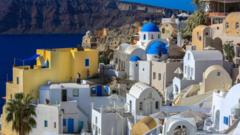
Schools on the enchanting Greek island of Santorini will be closed on Monday following a noticeable uptick in seismic activities in recent days. Local authorities have warned residents and visitors to avoid large indoor gatherings due to recent tremors, which have included quakes measuring 4.3 and 3.9 in magnitude nearby on Sunday. Located on the Hellenic Volcanic Arc, Santorini is renowned for its iconic whitewashed buildings and blue domed churches. While the island has not experienced a significant eruption since the 1950s, the current tremors are said to be a result of tectonic plate shifts rather than volcanic activity. Nevertheless, Greek authorities reported that the seismic activity in the Santorini caldera is on the decline.Although the recent tremors are categorized as minor, officials have introduced a range of preventative measures alongside school closures. These include advising against travel to the ports of Ammoudi and Fira, which are frequented by large cruise ships that transport tourists ashore using smaller boats. Schools on neighboring islands such as Anafi, Ios, and Amorgos will also remain closed.Residents are urged to stay away from abandoned structures and areas vulnerable to landslides. Experts, including Kostas Papazachos, a geophysics professor at Thessaloniki Aristotle University, stressed that while recent quakes are not expected to lead to an eruption, the possibility of stronger seismic events must not be dismissed. Papazachos emphasized the importance of caution during times of heightened seismic activity, asserting that large gatherings during an earthquake could lead to dangerous panic. The South Aegean Regional Fire Department is on heightened alert, with rescue teams deployed to ensure community safety amidst the ongoing tremors.Though Santorini's resident population stands at around 15,500, the island attracts millions of tourists each year, compelling the UK Foreign Office to update its travel advisories for British citizens. The island's striking crescent shape was formed from one of the largest volcanic eruptions in history around 1600 BC, with evidence of human settlement in the area tracing back to the Bronze Age. The last major eruption, in 1956, tragically resulted in the loss of at least 53 lives.