In brief
In Woodfin, NC, a year after Hurricane Helene wreaked havoc, community members are actively engaged in cleanup efforts along the French Broad River. As they pull debris from the water, including PVC pipes, they reflect on the ecological impacts of the storm and the recovery operations that followed. Conservationists express concern about the potential harm caused during cleanup efforts, with implications for local wildlife, including endangered species. Ongoing projects aim to restore the river ecosystems while the people affected continue to navigate their path to recovery.
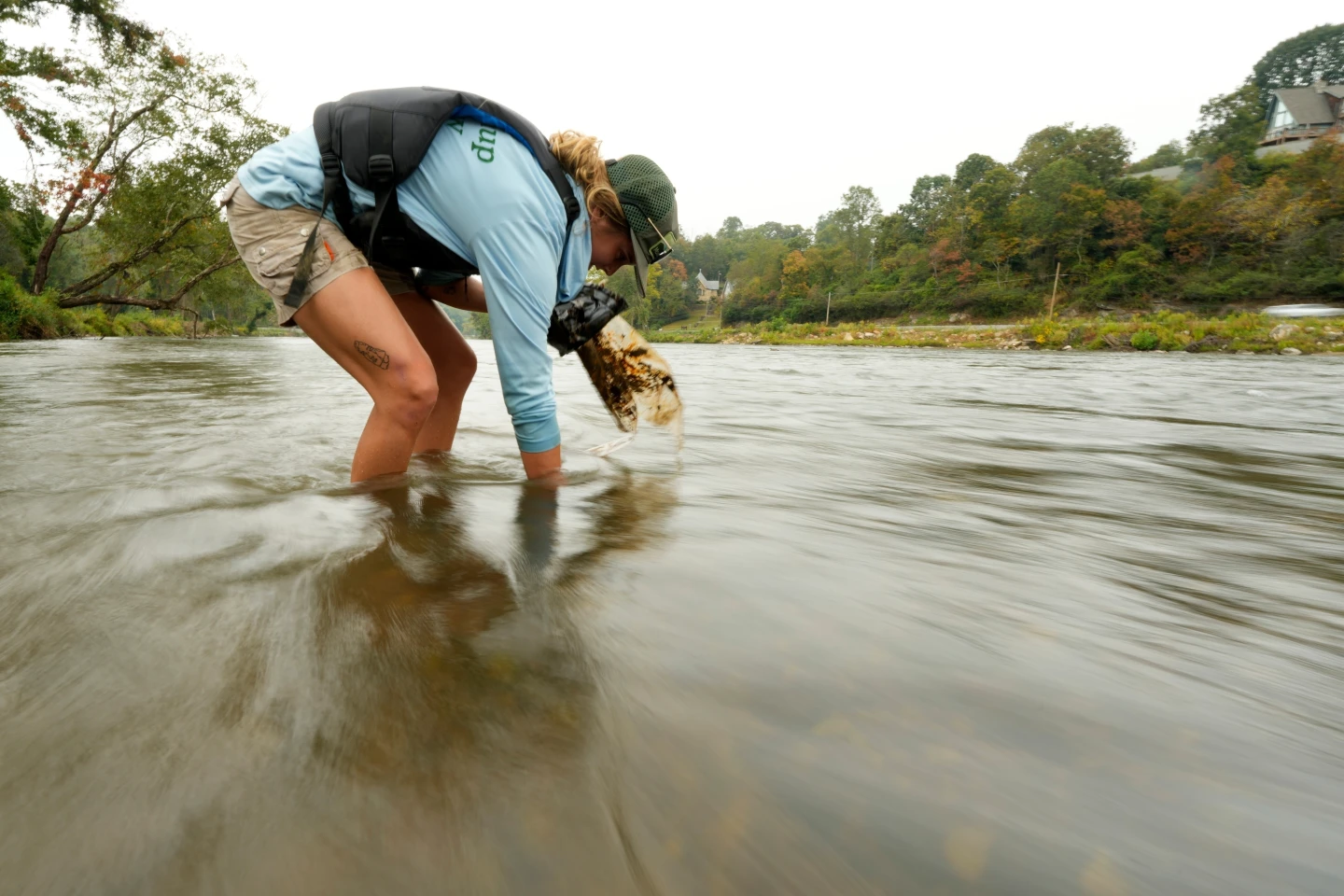
WOODFIN, N.C. (AP) — As floodwaters recede and the echoes of Hurricane Helene's destructive force fade, Clancy Loorham and his fellow cleanup workers are braving the currents of the French Broad River. They retrieve various debris, including a broken length of PVC pipe filled with river silt and small aquatic creatures, calling to each other in a spirit of camaraderie and determination to heal the river’s ecosystem.
More than a year since the storm’s aftermath in the Carolinas—a storm that resulted in over $80 billion in damage and the loss of countless lives—efforts continue to restore the rivers to their natural state. Despite the challenges faced during this process, community members are stepping up for the environment.
Many volunteers, often local rafting guides, are involved in intensive cleanup projects funded by state grants. Since July alone, more than 75 tons of debris have been removed from various rivers and streams across more than five watersheds in North Carolina. Yet there are still major concerns about the environmental impact of cleanup operations, particularly regarding sensitive aquatic life.
“They might be clearing debris, but in the haste, things might be damaged irreparably,” noted Jon Stamper, river cleanup coordinator for MountainTrue. He emphasized the importance of healthy river habitats for the local wildlife, particularly the endangered Appalachian elktoe mussel, stating that past cleanup efforts have unfortunately caused distress to these vulnerable species.
Vickie and Paul Revis are among the local residents whose lives were turned upside down by the floods. After losing their home to the storm, they rebuilt further away from the river, determined to make the best out of a challenging situation. “You just have to roll with it,” said Vickie, emphasizing resilience over bitterness as they adapt to their new normal.
With cleanup crews hard at work, there is hope that balance will be restored to the region’s rivers, yet as the community learns, the work is far from over. “There are still tons of debris waiting to be addressed,” stated Leslie Beninato, cleanup logistics manager with MountainTrue.