In brief
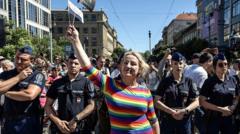
Thousands gathered in Budapest for this year's Pride event, despite government restrictions led by Prime Minister Viktor Orban. The turnout was between 100,000 to 200,000 participants, dwarfing last year's 35,000, as revelers expressed solidarity and demanded rights in a festival of joy and unity, directly challenging the government's narrative.
Thousands flooded the streets of Budapest on Saturday, making a loud and clear statement against Prime Minister Viktor Orban’s recent restrictions on LGBT rights during the annual Pride event. In stark contrast to the previous year's modest attendance of merely 35,000, this year saw an explosive turnout estimated at between 100,000 and 200,000 people—many of whom were young and eager to celebrate.The festive atmosphere transformed the Elizabeth Bridge and riverbanks along the Danube into a vibrant tapestry of music, dance, and protest. Participants expressed their dissent through colorful banners and attire that openly mocked Orban, including a memorable sign that stated, "In my history class, I learned enough to recognize a dictatorship. You don't need to illustrate it - Vik!"Budapest’s mayor, Gergely Karacsony, declared the event a remarkable triumph for freedom of assembly, emphasizing that this display of solidarity was a powerful counter to the government’s efforts to restrict rights. "We don't exactly look as though we were banned!" he jubilantly told the crowd. His participation and support were seen as a defining moment in his political career, amidst struggles for funding and governance against a central authorities that aimed to stifle such gatherings.The mayor also highlighted the event’s broader significance, noting, "In fact, we look like we're peacefully and freely performing for a puffed-up and hateful power." Participants of the event came from diverse backgrounds, transcending generations as they rallied for the rights of all individuals.This proud demonstration occurred concurrently with Orban attending a graduation ceremony for police and customs officials elsewhere in the city. His administration had previously justified limiting the Pride parade citing concerns for children, due to a controversial law associating LGBTQ+ representation with pedophilia. However, the mayor invoked another law that allowed the council to organize events outside assembly rights, permitting the parade to proceed.Despite the show of unity, the pro-government media criticized the parade as chaotic and inconsistent with freedom of expression, framing it as a moral aberration. The contrasting narratives highlight the ongoing societal and political divides present in Hungary.As this monumental Pride march unfolded, questions about the legality of the government's constraints loomed large. Legal experts theorized that future court decisions could dictate the legislative environment surrounding such events, further impacting the balance of power between the Budapest city council and the Orban administration. The outcome of these unfolding legal battles could redefine the landscape for civil rights and freedom of expression in Hungary.