In brief
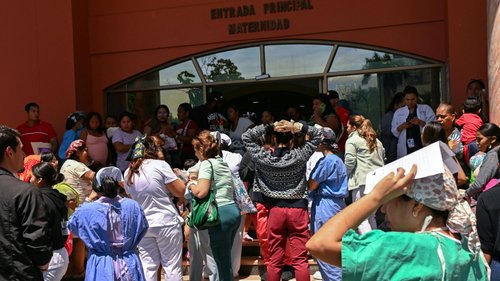
Overnight, residents of Naples were forced to camp outside following a strong 4.4-magnitude earthquake that struck just after midnight.
The tremor, originating at a shallow depth off the coast between Pozzuoli and Bagnoli, caused significant damage, including a damaged church bell tower and smashed car windscreens. The quake, recorded at 01:25 local time, was felt across the region and interrupted power supplies in parts of the city. Italian seismologists from the National Institute of Geophysics and Volcanology (INGV) reported no imminent volcanic eruption threat from the Campi Flegrei crater area. In Bagnoli, near the quake's epicenter, emergency services rescued a woman from the debris of a partially collapsed home, nursing only minor injuries. This earthquake marked the largest seismic event in the Campi Flegrei region in four decades, preceding it with at least six weaker aftershocks. As residents expressed concerns about ongoing tremors being indicative of a unique geological phenomenon, local authorities, including Bacoli's mayor, acknowledged a tumultuous night without reported structural damages.Prime Minister Giorgia Meloni was actively monitoring the situation and coordinating with officials, while schools across the area were closed to conduct structural checks on buildings. Concerns heightened over the accelerated phenomenon of “bradyseism,” which signifies significant ground movements affecting the volcanic landscape, with reports of ground elevation rates increasing threefold. Local experts emphasized the necessity for heightened readiness in light of these changes, as Naples remains situated atop one of Europe’s most dangerous volcanic systems.