In brief
More than a thousand individuals have been affected by respiratory issues following a sandstorm that engulfed central and southern Iraq, prompting official alerts and health responses.
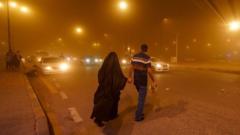
A fierce sandstorm has swept through Iraq, leaving health authorities grappling with the aftermath as over 1,000 people experience respiratory problems. Reports indicate that in Muthanna province alone, officials documented around 700 incidents of suffocation. Videos circulating on social media reveal thick orange layers of dust obscuring visibility and causing chaos across the affected areas, including power outages and flight cancellations.Dust storms, although a known phenomenon in Iraq, are reportedly on the rise, a situation exacerbated by climate change, as voiced by environmental experts. The Iraqi Ministry of Environment anticipates that "dust days" will increase in frequency going forward.In direct response to the sandstorm, authorities and residents employed face masks to shield themselves from airborne particles. Emergency services responded promptly, transporting patients to medical facilities where hospitals faced an influx of cases. Reports from Najaf province noted over 250 hospitalizations, while Diwaniyah province dealt with about 322 respiratory patients, including children. Additionally, Dhi Qar and Basra provinces recorded respiratory complaints from another 530 residents.The storm created severe visibility challenges, reducing it to under one kilometer (0.62 miles), which prompted airport closures in Najaf and Basra. However, optimistic forecasts suggest that conditions may start to improve by Tuesday morning.Documented as one of the countries most susceptible to climate change, Iraq continues to confront recurrent natural adversities, including significant health implications stemming from severe weather. A notable sandstorm in 2022 resulted in one fatality and over 5,000 individuals requiring medical attention for respiratory ailments. The environmental ministry's warnings point to a grim outlook on future "dust days" as the climate crisis intensifies in the region.