In brief
This article explores the seismic events that led to the tragic building collapse in Bangkok, illustrating the unexpected reach of the recent Myanmar earthquake.
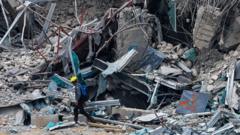
In a tragic twist of fate, a powerful earthquake that struck Myanmar recently has resulted in over 1,000 confirmed casualties and widespread structural destruction. Despite its epicenter being over 1,000 kilometers away, the tremors were felt as far away as Bangkok, leading to the collapse of an unfinished high-rise building in Thailand’s capital. To understand what triggered this seismic activity, one must look at Myanmar's geological positioning. Myanmar is located atop the convergence of four tectonic plates - the Eurasian, Indian, Sunda, and Burma microplates - making it one of the most seismically active areas in the world. The most recent earthquake registered a magnitude of 7.7, making it a significant event driven by a “strike-slip” movement along the Sagaing fault that runs through the country. Dr. Rebecca Bell from Imperial College London explained that such movement can create substantial friction, which once released, results in an earthquake.A key reason the earthquake's impact was felt so extensively is that it occurred at a shallow depth of just 10 kilometers below the surface. Shallow earthquakes typically generate more intense shaking than deeper ones, and this particular event released more energy than the atomic bomb dropped on Hiroshima. This energy not only caused significant damage in Myanmar but traveled southward towards Bangkok, where the soft soil amplified the seismic waves.While videos showed many tall buildings in Bangkok swaying, the new headquarters of the auditor-general’s office was the only structure to fully collapse. Experts believe that previous building safety standards were inadequate, particularly for older constructions that were not built to withstand such seismic activity. Although the collapsed skyscraper was under construction under newer guidelines, it utilized a "flat slab" method, which, while cost-effective, is poorly suited for earthquake-prone areas. Dr. Christian Málaga-Chuquitaype noted that this design flaw likely contributed to the building's failure during the tremor.Conversely, buildings in Myanmar experienced far more severe shaking. Unfortunately, many structures there do not adhere to modern earthquake-resistant standards, due in part to political upheaval and economic instability, leaving them vulnerable to disasters like this. Additionally, areas prone to liquefaction, where soil behaves like liquid due to water saturation, exacerbated the risk of collapses during the earthquake. As concerns rise about the potential for aftershocks and further damage to structures near fault lines, experts stress the importance of enforcing building codes to prevent future catastrophes. The situation remains dire, with ongoing rescue efforts seeking to locate survivors amid the rubble in both Myanmar and Thailand.