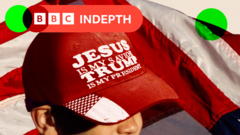
Standing on a podium in a Florida convention center on the election night, Donald Trump proclaimed he had been chosen by God to restore America to greatness. This divine narrative was a cornerstone of his campaign, resonating notably with a significant segment of American Christians, even before his recent assassination attempt. Many supporters likened him to Biblical figures, framing the election as a cosmic battle.
TV evangelist Hank Kunneman characterizes Trump as possessing an "anointing" that instills fear in adversaries. Jim Caviezel, an actor famed for portraying Jesus, jokingly dubbed Trump “the new Moses.” While Trump's faith commitment has often been questioned, millions view him as the divine answer to American strife, reflecting a broader narrative of spirituality intertwined with national identity.
Franklin Graham, a leading evangelist and the son of Billy Graham, strongly endorses Trump, seeing divine intervention in Trump escaping danger. He dismisses Trump's character flaws, citing Jesus's teachings about sin. For Graham, Trump’s key anti-abortion judicial appointments signify integrity and advocacy for religious freedoms, drawing fervent support among evangelicals, particularly as groups like Mike Huckabee promote pro-Israel policies potentially linked to religious prophecy.
Yet, the dynamics within Christianity are shifting. The Pew Research Center reveals a noticeable decline in church affiliation, plummeting from 90% in the 1990s to just 64% now. Trump’s message of regaining prominence for Christianity resonates with those feeling marginalized in this changing landscape, suggesting he promises restoration of their power.
Conversely, some Christians, like Reverend Monte Norwood, repudiate support for Trump, condemning his divisive and derogatory rhetoric. Norwood argues that such support reflects a hypocritical stance, neglecting character in favor of political affiliation. Meanwhile, data indicates a historical voting pattern where white Christians rally behind Republicans, while non-white groups lean Democratic.
Polling suggests Trump's strongest backing comes from white evangelical Protestants, with significant divides emerging among different racial and faith-based groups. Shifting voter dynamics have also seen rising support from non-traditional demographics due to socio-economic pressures.
Regardless of Trump’s political prowess, the growing trend of religious disaffiliation poses a long-term challenge for him. High-profile abuses in churches have driven many away, suggesting deep-rooted issues within organized faith. Yet, optimism prevails among figures like Graham, who believe Trump can offer protections against progressive legislation perceived as threatening to religious liberties.
As the 2024 elections loom, the debate around Trump’s influence on the Christian community continues, with a polarized outlook on what his presidency might mean for faith in America, prompting many to monitor evolving religious and political landscapes closely.