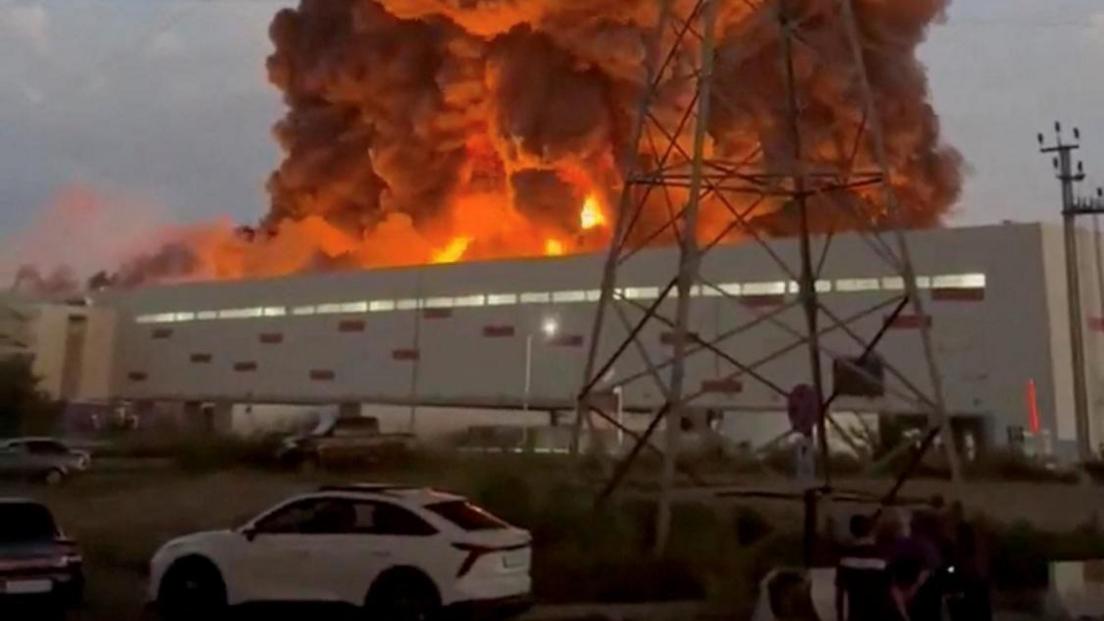
Wildberries warehouses in Russia were hit by Ukrainian drone attacks in a series of strikes that caused both civilian casualties and considerable economic damage. The attacks targeted facilities in Elektrostal, Kotovsk, Koledino, Krasnodar and Nevinnomyssk, killing at least eight workers and destroying goods worth an estimated £750m ($1bn).
Ukrainian drones have shifted from attacking oil depots to striking the logistics hubs used by Russian companies to procure military equipment. Kyiv has said it is deliberately targeting sites that store or transport components for its own drones and navigation tools.
For many independent sellers, Wildberries is not just a platform but their sole distribution channel. One stationery trader told the BBC that her entire inventory had been lost in the fire at Elektrostal, while another, who sold teenage clothing, suffered losses of ≈1.4m roubles (£13,300). Both reported that they have no recourse to compensation beyond a new “force majeure” clause added to their contracts during the week before the attacks.
Wildberries’ owner, Tatiana Kim, has promised to keep the platform running and offered temporary discounts and waived shipping fees for affected businesses, yet the sense of uncertainty has grown as future attacks loom.
The impact extends beyond individual sellers. In Russia, small and medium‑size firms have already faced steep VAT increases, loss of tax breaks, internet shutdowns and a fuel crisis triggered by earlier Ukrainian strikes on oil infrastructure. The Wildberries attacks represent another hit to a sector that the Kremlin has repeatedly highlighted as the backbone of the Russian economy.
As Ukraine’s drone‑campaign continues to disrupt supply routes, many businesses are caught between the need to maintain operations and the cost of rebuilding stock that has been destroyed. The situation underscores how the war’s reach has expanded from the battlefield into everyday commerce.