The US may want many of its foes gone from power. It doesn't usually send in the military and physically remove them. Venezuela's abrupt awakening took two forms.
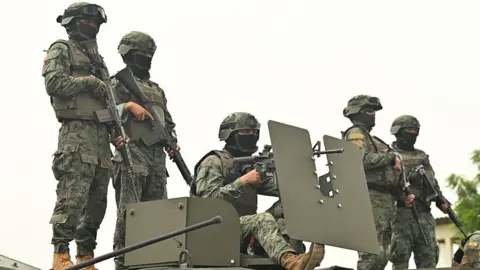
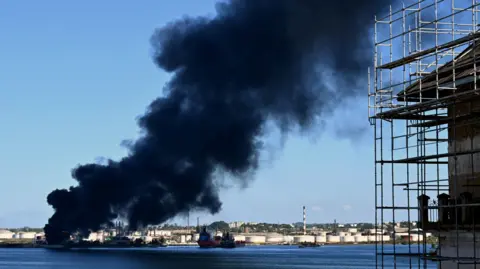
Its residents were woken abruptly to the sound of deafening booms: the sound of its capital Caracas under attack from US strikes targeting military infrastructure. Its government has now woken up from any illusion that US military intervention or regime change was just a distant threat.
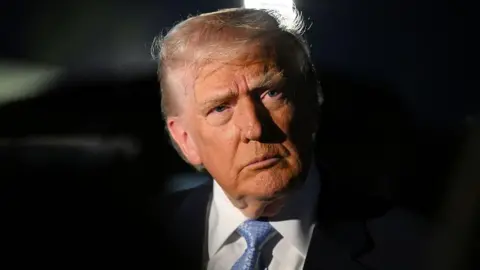
US President Donald Trump has announced Venezuela's leader, Nicolás Maduro, has been captured and flown out of the country. This was a man who wielded a huge amount of power: his government controlled the electoral system, the judiciary, the military, and held the loyalty of powerful militia groups.
By the end of Saturday, he was pictured in a grey tracksuit, his hands bound, his eyes blindfolded, being transported to detention in the US. It was an extraordinary fall from power. The US has long accused Maduro of leading a criminal trafficking organization, something he strongly denies.
Maduro now faces a US trial over weapons and drugs charges. His government has been accused of human rights abuses, and investigators have claimed that Maduro and top officials committed egregious violations amounting to crimes against humanity.
The latest developments represent a dramatic escalation in US engagement in the region, with military intervention marking a significant shift from previous policy approaches. Questions arise regarding the future governance of Venezuela. Will the US push for new elections or continue to target Maduro's allies? Trump claims the US will now run Venezuela but leaves many details unclear.
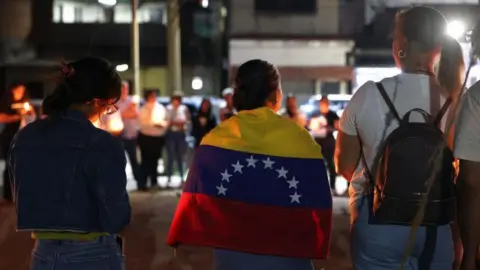
The reaction within Venezuela has been complex. While some celebrate what they perceive as liberation, skepticism about US intentions persists. Critics warn that US intervention could spark violent fragmentation, complicating an already unstable political landscape.
With allies like Brazil and Colombia opposed to US military action, and increasing discontent among Trump's base regarding foreign policy commitments, the implications of this intervention could redefine relationships in Latin America and beyond.
Its residents were woken abruptly to the sound of deafening booms: the sound of its capital Caracas under attack from US strikes targeting military infrastructure. Its government has now woken up from any illusion that US military intervention or regime change was just a distant threat.
US President Donald Trump has announced Venezuela's leader, Nicolás Maduro, has been captured and flown out of the country. This was a man who wielded a huge amount of power: his government controlled the electoral system, the judiciary, the military, and held the loyalty of powerful militia groups.
By the end of Saturday, he was pictured in a grey tracksuit, his hands bound, his eyes blindfolded, being transported to detention in the US. It was an extraordinary fall from power. The US has long accused Maduro of leading a criminal trafficking organization, something he strongly denies.
Maduro now faces a US trial over weapons and drugs charges. His government has been accused of human rights abuses, and investigators have claimed that Maduro and top officials committed egregious violations amounting to crimes against humanity.
The latest developments represent a dramatic escalation in US engagement in the region, with military intervention marking a significant shift from previous policy approaches. Questions arise regarding the future governance of Venezuela. Will the US push for new elections or continue to target Maduro's allies? Trump claims the US will now run Venezuela but leaves many details unclear.
The reaction within Venezuela has been complex. While some celebrate what they perceive as liberation, skepticism about US intentions persists. Critics warn that US intervention could spark violent fragmentation, complicating an already unstable political landscape.
With allies like Brazil and Colombia opposed to US military action, and increasing discontent among Trump's base regarding foreign policy commitments, the implications of this intervention could redefine relationships in Latin America and beyond.