
In brief
Ukraine’s navy has broadcast a new wave of drone strikes that have ignited at least 25 ships in the Sea of Azov over four days, with reports of additional vessels damaged or destroyed. The strikes target Russia’s “shadow fleet” of oil transporters that feed the occupied Crimea and its forces. Ukrainian drone commander Robert Brovdi claims the attacks have forced many ships to leave the Sea of Azov, worsening fuel shortages across Russia and threatening the Black Sea fleet’s ability to defend itself. Russian officials say the attacks have disrupted the maritime logistics network, prompting fuel rationing in more than ninety percent of Russian regions, even in the capital. The escalating drone campaign is part of Ukraine’s broader strategy to choke Russian supply routes while undermining Putin’s war effort.
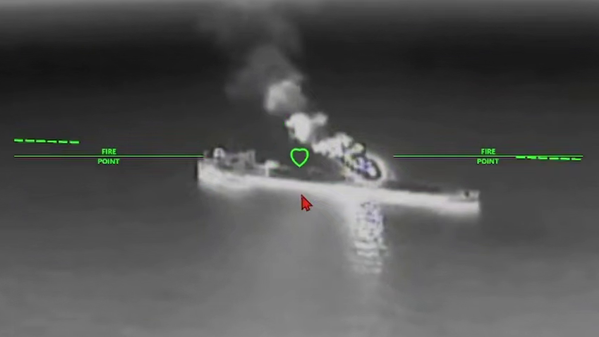
A state‑provided drone video captured the moment a night‑time Ukrainian patrol drone struck a Russian tanker and set it ablaze. The footage, shared by Ukrainian military commander Robert Brovdi, shows the tanker’s hull flooding and its crew forced to abandon ship.
Official estimates put the casualty count at 25 vessels damaged or destroyed in the last four days, with a possible total reaching 36 that includes unidentified commercial oil carriers. The attacks are part of a wider “logistics lockdown” aimed at choking fuel shipments to Crimea, the only land corridor that Russia can use to resupply its forces on the peninsula.
The strikes have forced many tankers to divert southwards toward the Black Sea to escape further hits. NASA‑tracked satellite imagery indicates large smokestacks rising from a damaged vessel near the Kerch port, confirming the lasting impact of the initial assault wave.
Russian authorities report that the Black Sea fleet has largely been forced offshore at Novorossiysk, reducing its defense capabilities over the Sea of Azov. In response, they say the attacks are a “shooting gallery” for Ukrainian drones, eliminating any chance of a quick turnaround or safe passage for benign cargo.
The fuel crisis, triggered by refinery attacks and now compounded by maritime disruption, has prompted widespread rationing across Russia. Reports point to long queues at post‑war gasoline stations on the streets of Moscow and St Petersburg, while Crimea struggles under shortages in power and transport.


