In brief
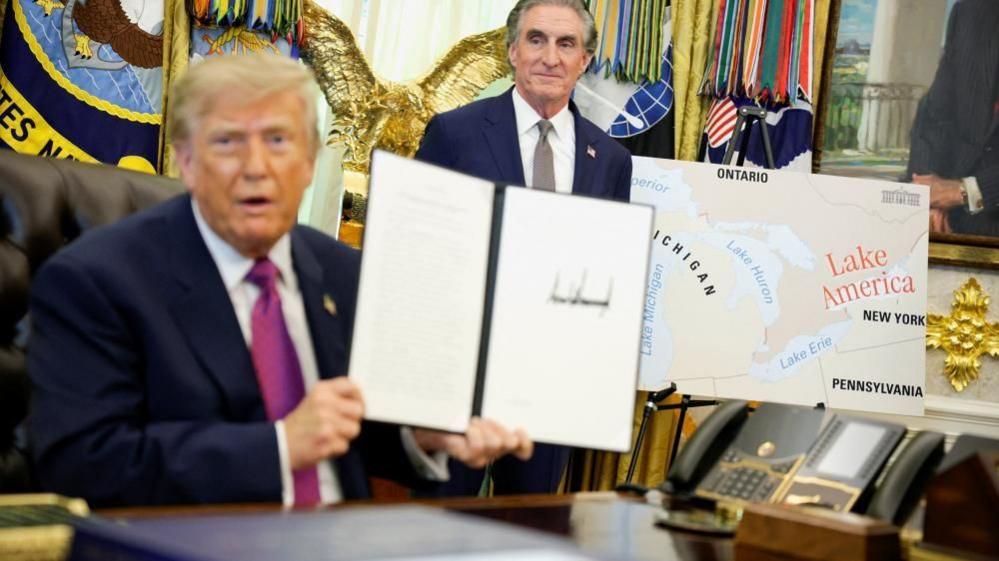
President Donald Trump signed an executive order declaring Lake Ontario, one of the Great Lakes, to be renamed Lake America. The edict comes after the United States imposed steep tariffs on Canadian goods, triggering a sharp deterioration in bilateral trade talks. Trump’s decision echoes a prior renaming of the Gulf of Mexico to Gulf of America, a move that was met with opposition from Mexico. Canadian officials, including Prime Minister Mark Carney and Industry Minister Melanie Joly, have rebuffed the change, underscoring the island’s historical name and Canada’s stance on its naming rights. International naming bodies have no formal authority to approve or reject such unilateral decisions, leaving Canada free to maintain its own nomenclature on the waterway.
Trump Signs Order Renaming Lake Ontario to Lake America
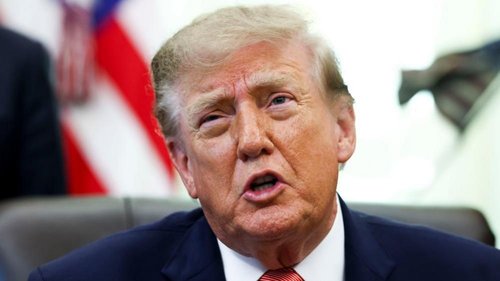
US President Donald Trump signed an executive order today, declaring Lake Ontario, the smallest of the Great Lakes, to be renamed Lake America. The change is intended to “reflect the rebranding of the United States” and “officially recognize that the United States is changing.”
The move comes in the wake of a sudden U.S.‑Canada trade dispute that saw the United States impose a 50% tariff on roughly $20 bn in Canadian goods. Canada plans to retaliate next month with dollar‑for‑dollar counter‑tariffs, escalating an already volatile negotiation.
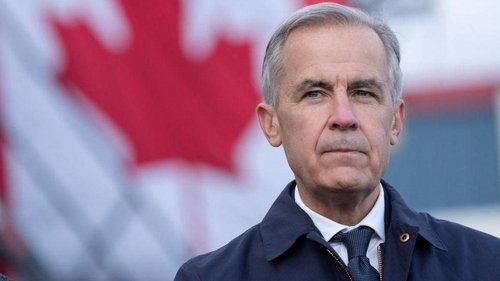
The name Lake Ontario has been in use for more than 400 years, predating both Canadian Confederation and the United States’ Declaration of Independence. Canadian Prime Minister Mark Carney dismissed the renaming as “unnecessary” and announced that Canada will continue to use its historic name “today and forever.”
Trump’s order mirrors a previous 2025 executive order that renamed the Gulf of Mexico to the Gulf of America. Mexico rejected that change, arguing that the U.S. cannot rename a body of water shared with another sovereign country. The dispute even spilled into digital mapping, with Google Maps offering different names for U.S. and Mexican users.
Under the new order, the U.S. Department of the Interior will update the Geographic Names Information Service, the federal repository of domestic geographic names, to reflect the change. Canada, however, is under no obligation to mirror this decision and has publicly rejected the rename.
Industry Minister Melanie Joly stated, “We’ll always call it Lake Ontario.” The five Great Lakes—Ontario, Huron, Michigan, Erie and Superior—carry names rooted in Indigenous languages or French influence, highlighting a complex cultural heritage attached to the region.
Trump’s remarks on the renaming were part of a broader, sharply worded rhetoric aimed at Canadian officials. He noted that the renaming was “official, effective immediately” and that the administration had filed the “necessary papers” to enforce it.
The renaming debate underscores deeper issues in U.S.-Canadian relations, as both nations navigate trade negotiations, cultural sovereignty and shared natural resources. While the United States holds discretionary authority over its internal geographic nomenclature, international bodies lack a unified governing body to approve or reject such unilateral changes.