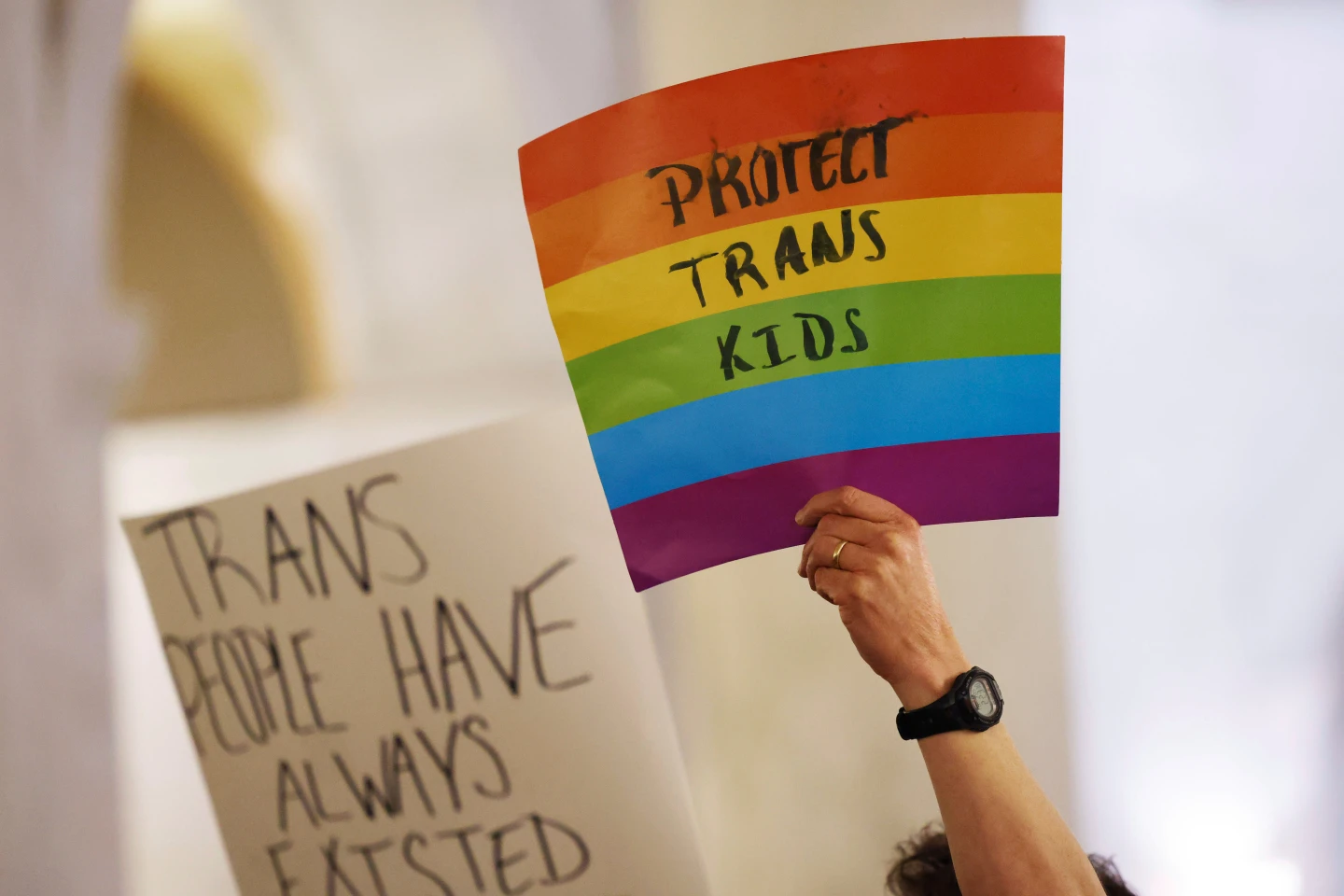
BECKY PEPPER-JACKSON, a 15-year-old sophomore from West Virginia, is becoming a focal point in the conversation around transgender athletes in competitive sports. After finishing third in the discus throw in her first high school season, she now faces potential disqualification under state law that bans transgender girls from competing in girls' sports.
This law is one of more than two dozen similar regulations across the United States, aimed at restricting participation based on biological sex assigned at birth. Although courts have temporarily blocked enforcement of West Virginia’s law, the upcoming Supreme Court hearings could overturn these protections and reshape the landscape of sports for transgender youths.
Pepper-Jackson expressed her commitment to this cause, stating, It’s something I’m here to do because... this is important to me. I know it’s important to other people. Her determination reflects her journey from feeling marginalized as a competitor to advocating for inclusivity.
As discussions heat up in the Supreme Court regarding the constitutionality of these bans, opinions remain divided. Supporters of such bans argue that they protect women's sports, citing inherent physical differences between sexes. Yet, many, including Pepper-Jackson's mother, see it as a discriminatory practice fueled by prejudice.
According to a recent Associated Press-NORC poll, a majority of U.S. adults support limiting transgender athletes' participation in sports aligned with their gender identity. This starkly contrasts with the experiences of young athletes like Pepper-Jackson, who simply want the right to compete.
The upcoming decisions from the Supreme Court could have significant implications not only for Pepper-Jackson but for all transgender athletes in America, as they navigate the complexities of identity, fairness, and acceptance in sports.