In brief
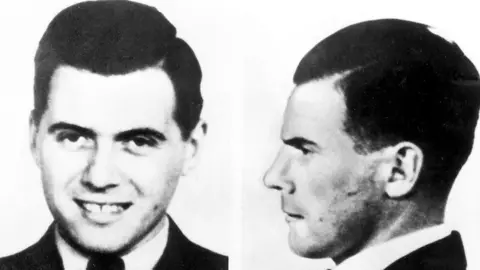
The Swiss Federal Intelligence Service has announced it will finally unseal long-hidden files on Josef Mengele, the notorious Nazi doctor from Auschwitz, amidst ongoing inquiries about his potential connection to Switzerland post-World War II. Historians had long sought access to these files, which may shed light on whether Mengele used this neutral country as a brief refuge.
The Swiss Federal Intelligence Service has said it will finally open long-sealed files on the notorious Nazi war criminal Josef Mengele, but without specifying when.
Mengele fled Europe after World War Two, but for years there have been rumors that he spent time in Switzerland, despite an international warrant for his arrest.
Historians have repeatedly requested access to the files, but until now the Swiss authorities have refused.
Mengele, a doctor who served in Germany's Waffen SS, was posted to the Auschwitz extermination camp, where he selected victims to be sent to their deaths. An estimated 1.1 million people died at Auschwitz, including around a million Jews.
Known as the 'Angel of Death', he conducted horrific medical experiments on prisoners, particularly children and twins.
After the war, Mengele changed both his uniform and name to evade capture. He eventually obtained Red Cross travel documents through a Swiss consulate in Italy, allowing him to escape to South America.
The documents, intended for war-displaced individuals, were inappropriately acquired by many Nazis seeking to avoid prosecution, leading to an apology from the Red Cross.
Switzerland’s connection to Mengele has long piqued interest. He reportedly vacationed in the Swiss Alps with his son in 1956, and there are hints he may have returned after an arrest warrant was issued in 1959.
Swiss historian Regula Bochsler uncovered warnings from Austrian intelligence in 1961 about Mengele potentially being in Switzerland, raising questions about his movements.
Despite historically being denied access to the files, the Federal Intelligence Service's recent change of heart may bring new insights, albeit with concerns over the potential redaction of sensitive information.
Historians remain skeptical about what revelations the files might yield, with some believing they’ll mainly discuss foreign intelligence rather than Mengele's activities.
This change comes after pressure and public scrutiny about Switzerland's role and responsibilities during the Nazi era, particularly regarding its banks and treatment of Jewish refugees.
As discussions around national security versus historical transparency continue, the awaiting files might only add more layers to Mengele's enduring mystery.