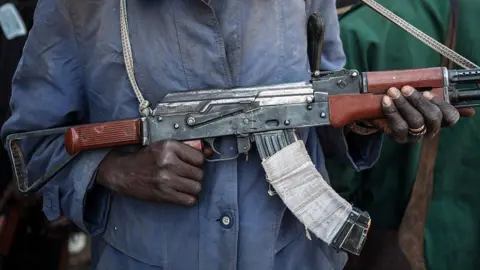
Sarah Peter, in a harrowing account of survival, described the horrific moments when a group of armed assailants attacked her church in Kurmin Wali, Nigeria, leaving her injured and traumatized. The 60-year-old recalled being struck on the head with a rifle as she was urged to move during the chaotic abduction that displaced numerous worshippers from their place of faith.
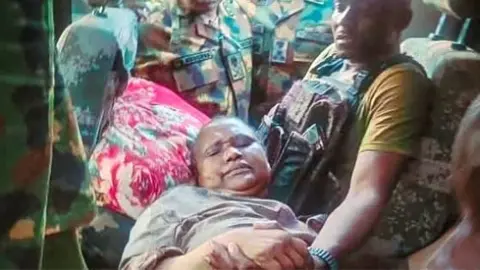
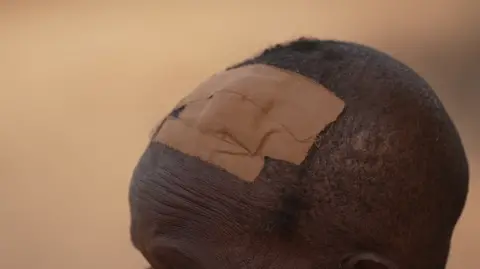
Blood was all over, she recounted, gently touching her wound, which was dressed with a large plaster to stem the bleeding. Her ordeal unfolded as she attended a service on a Sunday morning, a time when she and many others expected peace and tranquility.
Despite the violence, Sarah was among the fortunate few who escaped, revealing, They kept dragging me even when I told them I couldn’t walk. Then I hid somewhere until I couldn’t see them anymore. I was so weak I had to crawl back to the village. Out of the dozens taken by the gunmen, only 11 managed to break free, while more than 160 individuals remain unaccounted for, as reported by the local Christian Association of Nigeria.
Fear has settled back into the community, with residents calling for stronger security measures amid these escalating attacks, as officials navigate a challenging environment of denial and delayed responses regarding the abduction event.
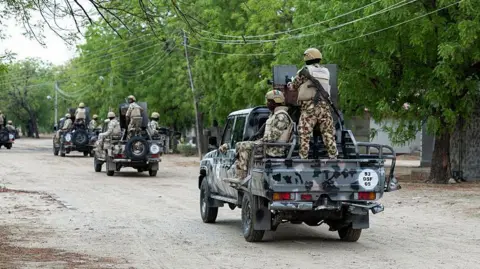
In the aftermath, the scene inside the Cherubim and Seraphim Movement Church stood grim, filled with scattered prayer books and overturned chairs—evidence of the violence that erupted. Local villagers, shocked by the sudden raid, expressed discontent with how authorities initially denied the occurrence of the attack. The state governor has since promised to enhance security in the area, pledging the establishment of military supports and aid for affected families.
The ongoing insecurity and the trauma inflicted during the raid remain deeply entrenched in the hearts of the Kurmin Wali villagers, who are now anxiously awaiting the safe return of their loved ones and demanding a more robust response from their leaders to combat the persistent threat of kidnapping in the region.
Blood was all over, she recounted, gently touching her wound, which was dressed with a large plaster to stem the bleeding. Her ordeal unfolded as she attended a service on a Sunday morning, a time when she and many others expected peace and tranquility.
Despite the violence, Sarah was among the fortunate few who escaped, revealing, They kept dragging me even when I told them I couldn’t walk. Then I hid somewhere until I couldn’t see them anymore. I was so weak I had to crawl back to the village. Out of the dozens taken by the gunmen, only 11 managed to break free, while more than 160 individuals remain unaccounted for, as reported by the local Christian Association of Nigeria.
Fear has settled back into the community, with residents calling for stronger security measures amid these escalating attacks, as officials navigate a challenging environment of denial and delayed responses regarding the abduction event.
In the aftermath, the scene inside the Cherubim and Seraphim Movement Church stood grim, filled with scattered prayer books and overturned chairs—evidence of the violence that erupted. Local villagers, shocked by the sudden raid, expressed discontent with how authorities initially denied the occurrence of the attack. The state governor has since promised to enhance security in the area, pledging the establishment of military supports and aid for affected families.
The ongoing insecurity and the trauma inflicted during the raid remain deeply entrenched in the hearts of the Kurmin Wali villagers, who are now anxiously awaiting the safe return of their loved ones and demanding a more robust response from their leaders to combat the persistent threat of kidnapping in the region.