
In brief
The ongoing trade war between the US and China intensifies as both nations express a willingness to negotiate, but neither side wants to appear weak by initiating discussions first.
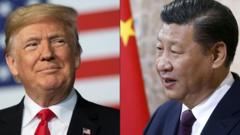
Despite soaring tariffs reaching up to 245% on some Chinese goods, a recent announcement from China's ministry of commerce indicates a potential openness to tariff negotiations with the United States. This development comes amid concerns about a possible economic downturn affecting both nations. A spokesperson for China's commerce ministry conveyed a consistent stance, stating, “If we fight, we will fight to the end; if we talk, the door is open,” emphasizing that the US must demonstrate sincerity and rescind unilateral tariffs to pave the way for dialogue. The backdrop of this announcement features a flurry of conflicting claims from both sides regarding the state of negotiations. A statement made on social media, linked to Chinese state media, asserted that the US had sought to open discussions, contradicting earlier claims from Trump that talks were already in progress—a narrative Beijing refuted. Experts describe this situation as a strategic game of chicken between US President Trump and Chinese President Xi Jinping, each maneuvering to maintain their image while searching for common ground to ease trade tensions. Political analysts suggest that de-escalation would ultimately benefit both sides, but neither party is willing to make the initial move that could be interpreted as a concession. Ja Ian Chong, a political science expert, highlights the precarious nature of the negotiations, stating that this scenario reflects a need for both sides to appear strong while grappling with the realities of the trade war's economic impact on their respective countries. Current tactics employed include "constructive ambiguity," allowing both parties to claim moral high ground as they engage in vague communication. According to experts, this strategy aims to provide an opportunity for resolution without either side losing face. They suggest that a third party could facilitate mediation or that both nations could reinterpret their outreach efforts to characterize the dialogue as a response, rather than a proactive measure. For both leaders, managing public perception is critical. Trump aspires to present himself as having pressured China into submission, while Xi aims to demonstrate his government’s strength amid the ongoing trade conflict. Both leaders face mounting domestic pressures from sectors adversely affected by the tariffs, with US retailers warning of price increases and supply shortages, while China battles diminishing consumption and rising unemployment. Despite the escalating trade disputes, both Trump and Xi may recognize that a complete victory is unattainable for either party, prompting a search for feasible compromise. The mixed messages regarding talks indicate that there are indeed discussions occurring, though the potential for a meaningful resolution remains uncertain. As noted by Chong, the two nations may remain locked in a standoff, each waiting to see who will concede first, suggesting an ongoing cycle of posturing that complicates relations.


