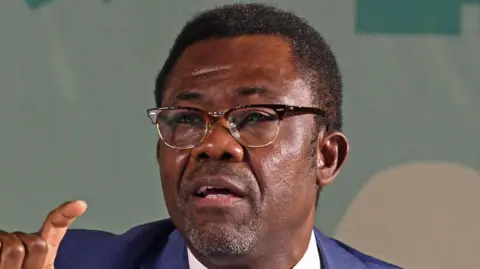
Under the blazing Las Vegas sun, the inaugural Enhanced Games has kicked off in a high-octane spectacle that redefines the boundaries of athletic competition. Organized by entrepreneurs Aron D'Souza and Maximilian Martin, the event invites elite athletes to compete using performance-enhancing drugs—legal and FDA-approved, but banned by the World Anti-Doping Agency (WADA)—for a staggering $25 million in prize money. With a $1 million bonus on offer for world-record-breaking performances, the competition has drawn attention from top athletes like British Olympic swimmer Ben Proud and US sprinter Fred Kerley.
The games, held in a sprawling Las Vegas arena, feature athletes openly discussing their use of testosterone, human growth hormone, and stimulants. While organizers claim transparency and the event aims to 'push the limits of human performance,' critics—including the US Anti-Doping Agency (USADA) and UK Athletics—label it an affront to the spirit of clean sport. 'We don't want kids to have to say, in order to win an Olympic medal, I have to inject myself with a dangerous drug,' said USADA CEO Travis Tygart, condemning the normalization of doping.
Proud, who took silver in the 50m freestyle at the 2024 Paris Olympics, faces backlash for participating. 'There's no money in sport,' he admitted, highlighting the financial lure of the Enhanced Games. Yet his involvement has sparked outrage, with GB Aquatics declaring he will not be considered for the Olympic team. Meanwhile, American swimmer Hunter Armstrong vows to compete clean, arguing he 'has taken pride in getting as far as I can on natural God-given talent,' though his eligibility for the 2028 LA Olympics remains uncertain.
The event has also raised broader concerns. Enhanced Group, the company behind the competition, recently listed on the NYSE, sparking fears that the spectacle could normalize unregulated drug use. Health experts warn of severe risks, from cardiovascular damage to body dysmorphia, exacerbated by social media trends. 'Kids are using social media filters, Botox injections—this isn't just about sports,' said Joe Vennare of Fitt Insider, adding that society must address the 'cultural consequences' of performance-driven pressure.
Despite criticism, the Enhanced Games remains defiantly bold. Athletes like strongman Hafthor Bjornsson, known for his 'Game of Thrones' role, argue their openness about doping 'gives them more integrity' than hidden cheaters. With the event blending celebrity, controversy, and cash prizes, the line between sports innovation and ethical compromise grows ever thinner. As the competition unfolds, questions linger: Is this the future of athletic ambition—or the death knell of clean competition?}
The games, held in a sprawling Las Vegas arena, feature athletes openly discussing their use of testosterone, human growth hormone, and stimulants. While organizers claim transparency and the event aims to 'push the limits of human performance,' critics—including the US Anti-Doping Agency (USADA) and UK Athletics—label it an affront to the spirit of clean sport. 'We don't want kids to have to say, in order to win an Olympic medal, I have to inject myself with a dangerous drug,' said USADA CEO Travis Tygart, condemning the normalization of doping.
Proud, who took silver in the 50m freestyle at the 2024 Paris Olympics, faces backlash for participating. 'There's no money in sport,' he admitted, highlighting the financial lure of the Enhanced Games. Yet his involvement has sparked outrage, with GB Aquatics declaring he will not be considered for the Olympic team. Meanwhile, American swimmer Hunter Armstrong vows to compete clean, arguing he 'has taken pride in getting as far as I can on natural God-given talent,' though his eligibility for the 2028 LA Olympics remains uncertain.
The event has also raised broader concerns. Enhanced Group, the company behind the competition, recently listed on the NYSE, sparking fears that the spectacle could normalize unregulated drug use. Health experts warn of severe risks, from cardiovascular damage to body dysmorphia, exacerbated by social media trends. 'Kids are using social media filters, Botox injections—this isn't just about sports,' said Joe Vennare of Fitt Insider, adding that society must address the 'cultural consequences' of performance-driven pressure.
Despite criticism, the Enhanced Games remains defiantly bold. Athletes like strongman Hafthor Bjornsson, known for his 'Game of Thrones' role, argue their openness about doping 'gives them more integrity' than hidden cheaters. With the event blending celebrity, controversy, and cash prizes, the line between sports innovation and ethical compromise grows ever thinner. As the competition unfolds, questions linger: Is this the future of athletic ambition—or the death knell of clean competition?}