In brief
In Seoul, thousands of citizens rally with messages against both the U.S. and China, indicating South Korea's precarious position amidst rising tensions. The country continues to be a crucial ally for the U.S., while also relying heavily on economic relations with China. President Lee Jae Myung must deftly navigate these superpower dynamics to ensure South Korea's stability and growth, amidst growing domestic protests and geopolitical pressures.
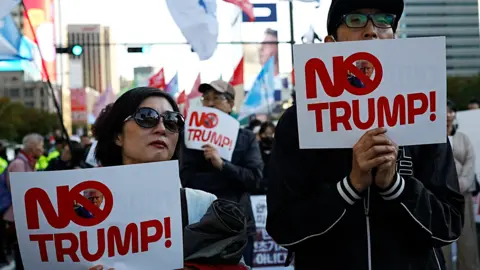
No Trump! the rally of hundreds shouted, growing louder as it neared the United States embassy in Seoul. While a line of police buses stopped them from reaching the gates, a stage and loudspeaker ensured their voices resonated across Gwanghwamun square, within earshot of U.S. President Donald Trump's representatives. This protest was part of a larger expression of discontent against both the U.S. and China as South Korea prepares to host leaders from both superpowers this week. Protesters voiced their frustrations through banners like No China and accusations against the Chinese Communist Party. Leaders and citizens alike expressed the dilemma of being caught between two superpowers as President Lee Jae Myung attempts to navigate these complex relationships. Analysts suggest that the geopolitical landscape is particularly tense, urging Lee to manage both allies carefully as he hosts meaningful talks this week, which could significantly impact the region’s trade and security landscape. Furthermore, sentiment appears to shift between the two nations: while the U.S. reigns as the most significant ally, recent political and economic tensions can no longer be ignored, urging the South Korean government to maintain a pragmatic approach towards integrating relations with China.