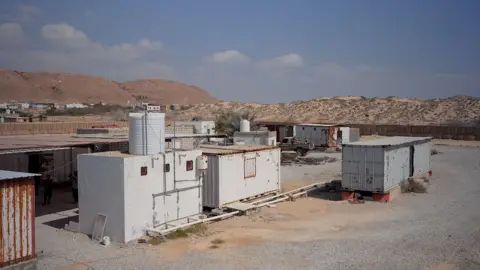
Saudi Arabia has backed a decisive demand from Yemen's presidential council for the United Arab Emirates to withdraw its forces within 24 hours. This call follows a controversial Saudi-led coalition airstrike that targeted what was claimed to be a weapons shipment intended for UAE-backed separatists at the port of Mukalla.
The Saudi foreign ministry accused the UAE of allegedly pressuring the Southern Transitional Council (STC)—which seeks independence for southern Yemen—to engage in military offensives in the provinces of Hadramawt and al-Mahra. The kingdom's foreign ministry warned of potential actions it would take to address what it considers 'highly dangerous' provocations.
Reacting to the Saudi statements, the UAE's foreign ministry firmly denied that the shipment involved weapons and expressed 'deep regret' over the Saudi accusations, calling them baseless. It underscored its commitment to upholding security in the region, stating it had not directed any Yemeni forces to undertake actions that would jeopardize Saudi security.
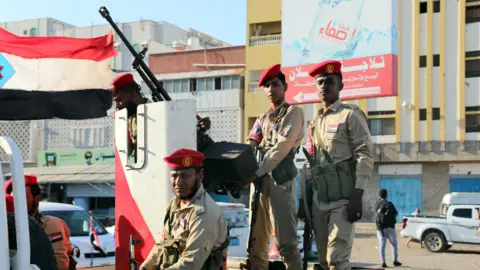
STC leaders dismissed the Saudi ultimatum as legally unfounded while reaffirming their role as significant partners against the Iran-backed Houthi movement. In light of escalating tensions, Rashad al-Alimi, head of the presidential council—which includes STC members—cancelled a joint defense pact with the UAE, urging forces to evacuate to safeguard Yemen's territorial integrity and stability. A state of emergency has also been declared to address internal conflicts and the Houthi threat.
This shift came after the Saudi-led coalition confirmed it had carried out a 'limited' airstrike on military assets associated with STC forces, citing immediate threats to peace and stability. Reports indicated early warnings of the attack, which resulted in the destruction of military vehicles without any reported casualties.
Yemen, a country ravaged by civil war since 2014, continues to witness significant loss of life and humanitarian suffering as the conflict continues to evolve, drawing in regional powers and complicating efforts for peace.
The Saudi foreign ministry accused the UAE of allegedly pressuring the Southern Transitional Council (STC)—which seeks independence for southern Yemen—to engage in military offensives in the provinces of Hadramawt and al-Mahra. The kingdom's foreign ministry warned of potential actions it would take to address what it considers 'highly dangerous' provocations.
Reacting to the Saudi statements, the UAE's foreign ministry firmly denied that the shipment involved weapons and expressed 'deep regret' over the Saudi accusations, calling them baseless. It underscored its commitment to upholding security in the region, stating it had not directed any Yemeni forces to undertake actions that would jeopardize Saudi security.
STC leaders dismissed the Saudi ultimatum as legally unfounded while reaffirming their role as significant partners against the Iran-backed Houthi movement. In light of escalating tensions, Rashad al-Alimi, head of the presidential council—which includes STC members—cancelled a joint defense pact with the UAE, urging forces to evacuate to safeguard Yemen's territorial integrity and stability. A state of emergency has also been declared to address internal conflicts and the Houthi threat.
This shift came after the Saudi-led coalition confirmed it had carried out a 'limited' airstrike on military assets associated with STC forces, citing immediate threats to peace and stability. Reports indicated early warnings of the attack, which resulted in the destruction of military vehicles without any reported casualties.
Yemen, a country ravaged by civil war since 2014, continues to witness significant loss of life and humanitarian suffering as the conflict continues to evolve, drawing in regional powers and complicating efforts for peace.