In brief
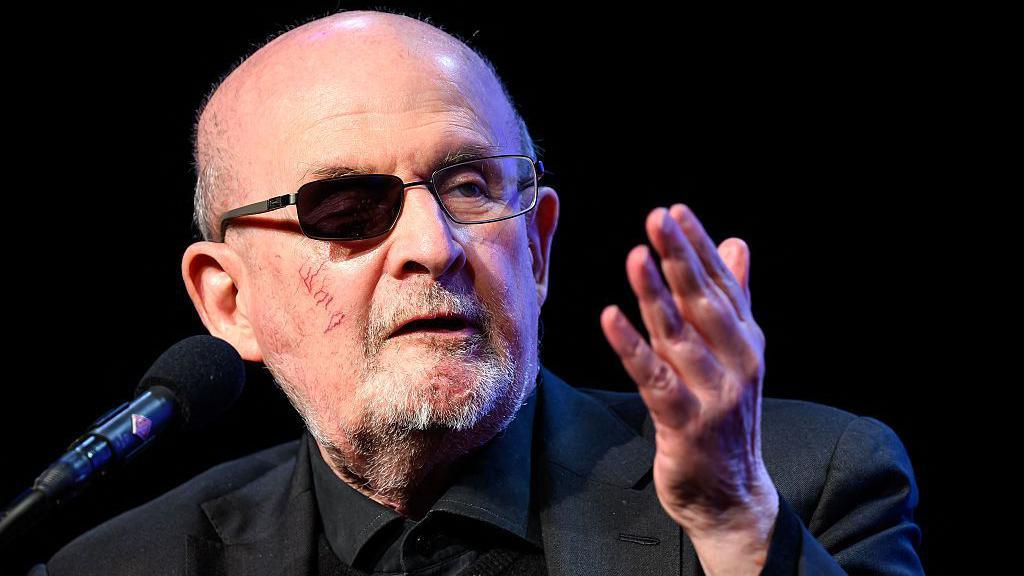
In New York, the attacker who stabbed Sir Salman Rushdie in 2023 was found guilty of providing material support to Hezbollah, a group designated as terrorist. Prosecutors claimed the attack was driven by a 1989 Iranian fatwa and a 2006 Hezbollah speech. The conviction adds transnational terrorism to the man’s already‑severe prison term, where he could now face life imprisonment. Rushdie testified on the stand, describing the brutal attack and the heroics of a firefighter who saved his life.
In a New York federal court, the U.S. man who was already serving a 25‑year sentence for attempting to kill famed author Sir Salman Rushdie was found guilty of providing material support to the Lebanese militant group Hezbollah.
Hadi Matar, 28, was convicted of engaging in an act of transnational terrorism and of supporting Hezbollah, which the United States, the United Kingdom and other nations designate as a terrorist organization.
Prosecutors argued that Matar was motivated by the 1989 fatwa issued by Iran’s religious leader against Rushdie, and that his plan had been laid out over two years.
On the stand, Rushdie described the attack in detail, recounting being stabbed fifteen times and the presence of a firefighter who provided medical care and saved his life.
The judge delivered a statement saying, "The defendant decided no one was going to do it, so he had to do it," echoing Assistant U.S. Attorney Timothy Lynch’s closing remarks. The trial footage included videos made by Matar and interviews with Rushdie.
The defendant’s defense suggested that the attack was not motivated by terrorism but rather criticised the controversy sparked by Rushdie’s 1988 novel The Satanic Verses. Rushdie countered, "I don't believe the book is on trial; somebody else is on trial."
Matar’s federal conviction could mean life imprisonment, on top of the 25‑year sentence he is currently serving for attempted murder.
Rushdie’s novel drew ire among some Muslims who considered its content blasphemous, leading to death threats and a nine‑year period in hiding after the fatwa was issued. The author later chronicled his recovery in a memoir called Knife: Meditations After an Attempted Murder.
A later report noted that Rushdie released his first fiction in years, The Eleventh Hour, in March 2025.