In brief
Quincy Jones transcended his tough upbringing to become a revered musician, producer, and activist, influencing countless genres and artists.
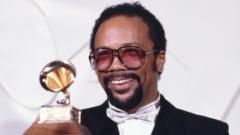
Quincy Jones, the illustrious music figure, lived for 50 years after being celebrated in a memorial service that was initially planned due to a near-fatal brain aneurysm in 1974. At just 41, he had already etched an unforgettable legacy in American music as a performer, arranger, songwriter, and record executive, having made his debut in the vibrant jazz clubs of the 1950s. By working with legendary artists including Dinah Washington, Frank Sinatra, and Lesley Gore, he affirmed his status in the industry, ultimately prompting his friends to arrange a tribute concert in anticipation of his passing.However, when Jones defied the odds and survived, the concert proceeded even as he cautiously attended, accompanied by his neurologist, who advised against excitement. "That was hard to do with legends like Richard Pryor and Marvin Gaye around," he humorously recounted in a 2008 Newsweek interview. Jones was born and raised on Chicago's South Side during the Great Depression, experiencing a tumultuous childhood marked by his mother's mental illness and his father's association with gangsters. His early life on the streets was fraught with violence, yet at the age of seven, a pivotal moment occurred when he discovered a piano in a community center, leading him to pursue music as a career. By age 14, he had started building relationships in the jazz scene, befriending Ray Charles and working with icons like Dizzy Gillespie.His recording career took off at Mercury Records, where he became the first African American vice-president of a major record label, producing the hit "It's My Party." Furthermore, Jones’ collaboration with Sinatra resulted in two acclaimed albums, solidifying his reputation as one of the finest musicians of his era. Over the years, he created soundtracks for notable films, gaining his first Oscar nomination for "In Cold Blood."A game-changer in his career was his work with Michael Jackson, starting with "Off the Wall" and culminating in the unparalleled success of "Thriller." He meticulously assembled a talented team for Jackson's projects, bringing a level of artistic and commercial success that defined the 1980s. The pinnacle of this partnership was the charity single "We Are the World," which united a plethora of top artists to raise funds for famine relief.Throughout his career, Quincy maintained a focus on social activism, founding the Quincy Jones Listen Up Foundation and championing various humanitarian causes. His struggles with personal issues, including three marriages and a notable battle with health problems, shaped his life, yet he remained committed to creating impactful music.Despite these challenges, his contributions influenced numerous genres, from jazz to rap, and inspired a new generation of artists who revered him. Following his death at 91, the music world mourns a true giant, and if a second memorial concert honors his legacy, many stars will undoubtedly unite to celebrate his remarkable journey.