In brief
Interpol’s Operation Global Chain, a coordinated crackdown across 59 countries, resulted in over 1,000 arrests and the identification of 2,070 victims, the vast majority women. The operation dismantled networks that trafficked people into Cambodian online scamming rings and recruited under‑age girls in Europe via social media. Emerging trends revealed Latin American victims being forced into labor in Europe, while 10% of minors were subjected to sexual exploitation. Country‑specific actions included Brazil’s Federal Police uncovering 406 victims and Argentina rescuing two Bolivian children, highlighting the global reach and cooperation of law‑enforcement agencies.
Over 1,000 people have been arrested in a global crackdown on human trafficking, as Interpol announced the results of Operation GLOBAL CHAIN carried out across 59 countries.
The operation, coordinated by Interpol with Europol and Frontex, targeted victims trafficked for sexual exploitation, forced labour and associated crimes. Authorities reported 334 arrests for human trafficking and 690 for related offences, while 2,070 victims or potential victims were identified, most of them women.
Dismantled networks included one that trafficked victims into Cambodia for online scamming and another that recruited under‑age girls via social media into European sex work. These cases illustrate the evolving methods traffickers employ.
A key finding was the rise of Latin American victims being forced into labour in Europe, with about 10% of identified minors subjected to sexual exploitation.
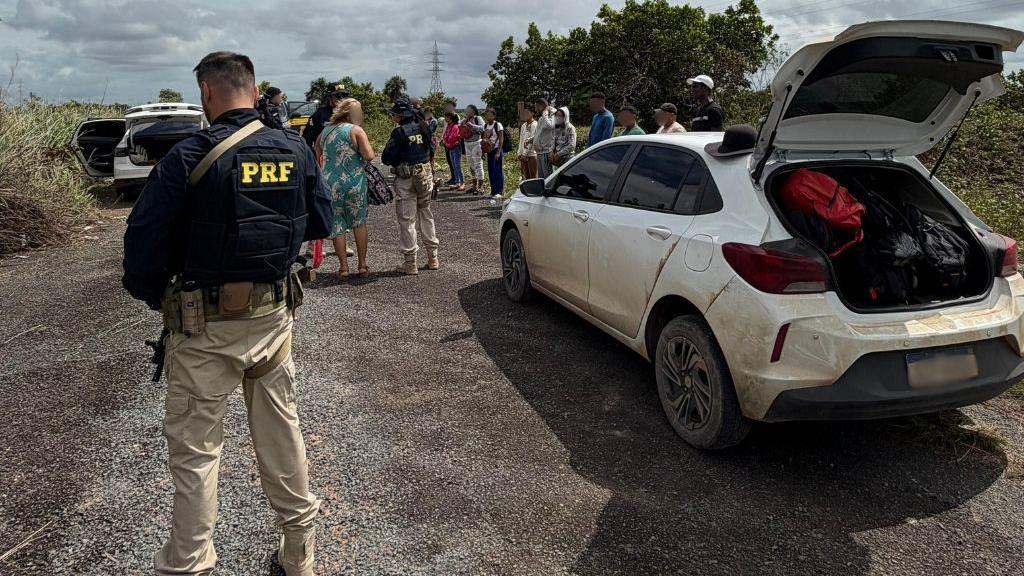
Country‑specific actions added depth to the global effort: Colombia launched an airport prevention campaign to warn about fraudulent job offers; Brazil’s Federal Police uncovered 406 victims pushed into online scamming in Cambodia; Argentina rescued two Bolivian children forced to work in a grocery store.
In total, 40,000 officers participated across Africa, the Americas, Asia and Europe, leading to 465 investigations and the identification of 201 suspects in addition to the 1,000 arrests.
Interpol secretary Valdecy Urquiza highlighted that human trafficking remains "one of the most profitable and pervasive forms" of organised crime, and praised the operation as evidence of what can be achieved when countries collaborate to disrupt criminal networks and bolster regional cooperation.