
In brief
Over the past 30 years, homemade bomb violence in West Bengal has claimed the lives and limbs of at least 565 children, a tragic toll stemming from a history of political conflict in the region. This article highlights personal accounts of survivors and explores the alarming intersection of childhood innocence and political turmoil.
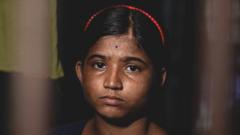
In West Bengal, amidst vibrant streets and bustling homes, a silent epidemic of violence has taken a heartbreaking toll on children. A recent investigation by the BBC reveals that at least 565 children have been killed or injured by homemade bombs in the state over the last three decades—a chilling statistic reflecting a deeply rooted culture of political violence.Among the many tragic stories is that of Puchu Sardar, a nine-year-old boy who once played cricket in his slum in Kolkata. What he thought was a cricket ball turned out to be a bomb, resulting in a catastrophic explosion that claimed the lives of two of his friends and left him with severe injuries. Puchu lived in agony for months, his life forever altered.The origins of this violence date back over a century, intertwining with political strife and power struggles in West Bengal since India's independence. Political rivals have utilized these crude bombs to instill fear and control voter behavior during elections, often leaving children unknowingly victimized in outdoor spaces where these explosives were hidden.The investigation conducted by the BBC unearthed reports from the local newspapers detailing the grim history of child casualties. The data reflects a worrying trend where a child falls victim to bomb violence every 18 days, with a startling 60% of incidents occurring while children were innocently playing outside.Among the youngest victims is seven-year-old Poulami Halder, whose routine flower-picking turned lethal when she stumbled upon a bomb disguised as a ball. She faced extensive injuries, leading to the amputation of her hand, altering the course of her life.Further compounding the tragedy is the ongoing political climate in West Bengal, where political parties downplay their involvement with these weapons. Despite denying the use of bombs for political gain, experts and affected families alike voice concerns over the growing normalization of bomb-related violence, with many still unaccounted for and unpunished.Echoing the sentiments of his community, Pankaj Dutta, a former police officer, remarked on the systemic neglect towards the safety of children, stating there is "extreme abuse of childhood" occurring due to this violence. Families like that of nine-year-old Raj Biswas, who tragically lost his life to a bomb explosion, continue to mourn the loss while raising calls for societal change.As children bear an undeserved burden amidst political corruption, the hope for a peaceful future hangs in the balance. Many survivors like Poulami and Sabina Khatun persevere, dreaming of careers as teachers despite the emotional and physical scars they carry. Yet, with no resolution in sight, the cycle of violence continues, leaving innocent childhoods shattered in its wake.


