In brief
In quiet corridors of Novaya Gazeta, Nobel laureate Dmitry Muratov declares that President Vladimir Putin’s claim of victory over Ukraine is false, underlining the brutal shutdown of an independent voice. The award‑winner explains how his newspaper was nationalised and its website blocked, while he lists the thousands imprisoned for speaking out. Muratov warns of a looming nuclear escalation and criticises the Kremlin’s duplicity, arguing that the fight already shows no path to victory. The report also documents the persecution of journalists and opponents, emphasising the peril of dissenting in Russia.
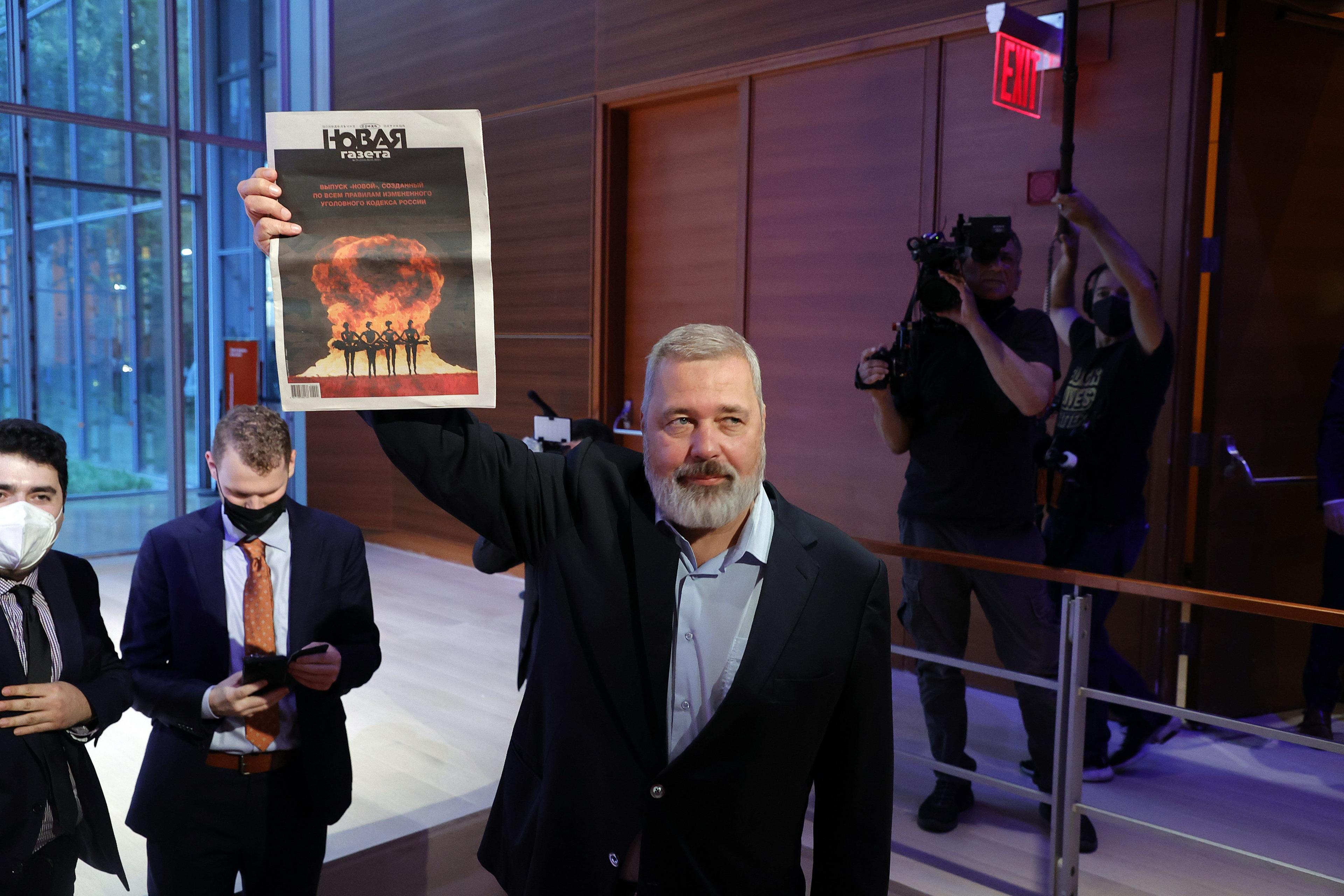
In the silent halls of Novaya Gazeta’s Moscow offices, Dmitry Muratov, the 2021 Nobel Peace Prize winner, tells the BBC that President Vladimir Putin’s claim of victory in Ukraine can no longer be upheld.
Muratov co‑founded the newspaper more than three decades ago, and it became the leading platform for investigative journalism in Russia, exposing state abuses and corruption. In 2021 he was awarded the Nobel Prize alongside Natalia Kavdin for safeguarding freedom of expression, a recognition that did not shield the paper from suppression.
“The newspaper’s printing presses were nationalised, and its registration revoked,” Muratov explains. “Novaya Gazeta still has an online presence, but the site is blocked inside Russia and can only be accessed abroad or via VPNs.”
Muratov’s warning extends beyond the press. He points to the widening crackdown on dissent since Russia’s 2022 invasion of Ukraine, claiming that since the start of the so‑called “special military operation” at least 1,500 people are in prison for speaking against state policy – “three times more” than the KGB era.
“Because what has been going on for nearly five years, no matter how it ends, can no longer be considered a victory,” Muratov says. “It cannot be a victory when two Slavic nations have ripped a million people to shreds.”
He cautions that the looming possibility of nuclear escalation cannot be dismissed. “The need to use nuclear weapons has been mentioned over 500 times since the beginning of the year,” he says, citing discussions on state TV and at a state‑run forum. Muratov is skeptical of claims that Putin might actually deploy nuclear arms, describing “political experts” on the topic as “charlatans.”
The Kremlin’s stance is unrelenting. Many opinion leaders are branded as “foreign agents,” “extremists,” or “terrorists.” Muratov himself carries the “foreign agent” label, limiting his rights to teaching and estate access, while he continues to suffer from the threat of imprisonment for the political prisoners he highlights.
Images of jailed journalists — Antonina Favorskaya, Konstantin Gabov, Sergey Karelin and Artyom Kriger — and a protest of a musician, Pavel Kushnir, who died in pre‑trial detention, illustrate the harsh reality of those who dare to dissent. Muratov’s photographs of these prisoners serve not only as pictorial evidence but also as a plea for solidarity, noting that “no one in the world is interested in the political prisoners who first spoke out.”
Despite the bleak portrait, Muratov hints at glimmers of hope. He reports that on the streets of Moscow, colleagues receive quiet words of gratitude from the public, a testament to the ongoing support for free reporting even amid oppressive conditions.