In brief
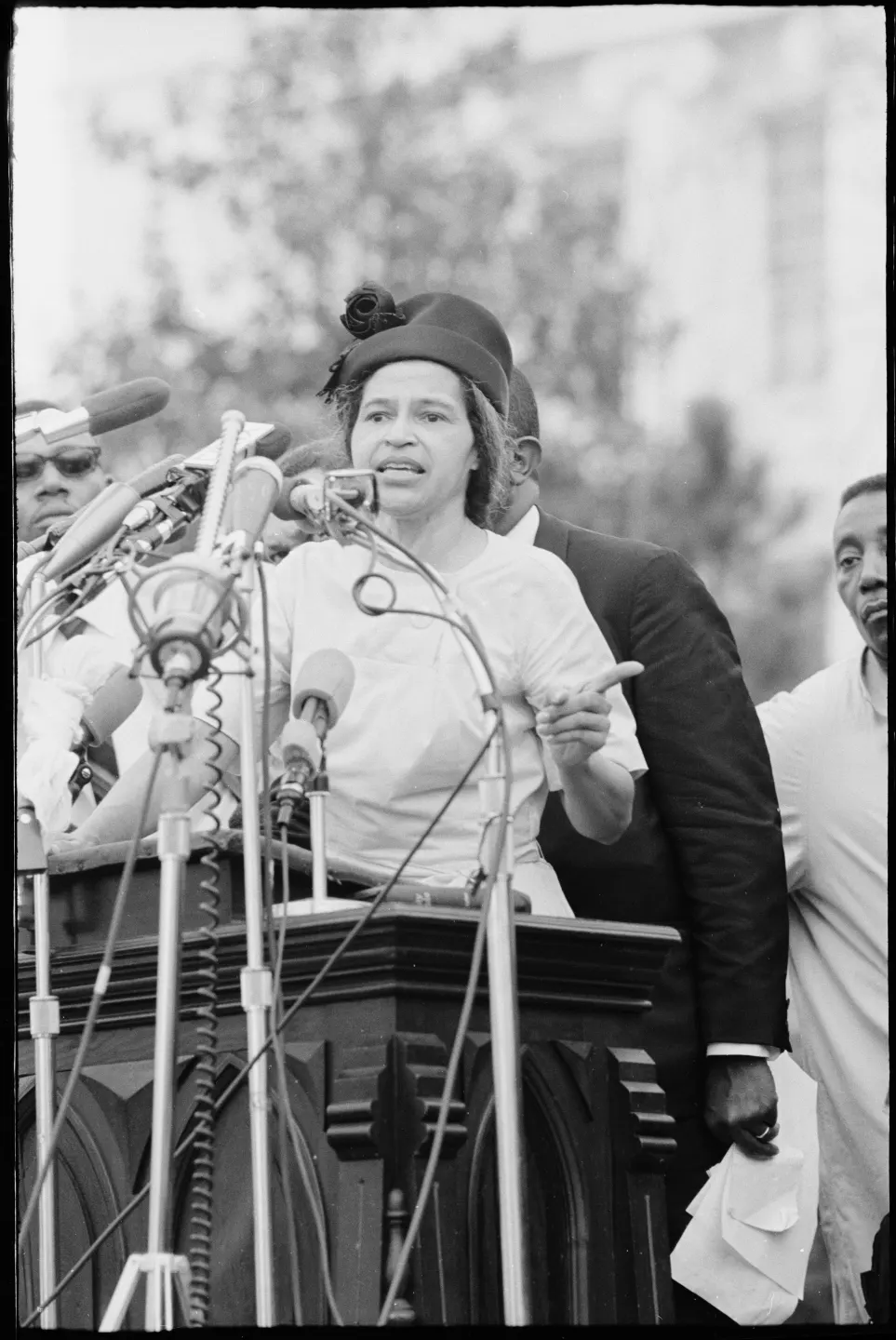
Decades after her iconic act of civil disobedience in 1955, fresh photographs of Rosa Parks from the Selma to Montgomery march offer a new perspective on her legacy. Taken by Civil Rights photographer Matt Herron, these previously unseen images reveal the often-overlooked aspects of Parks’ activism. The photos and subsequent community gatherings have rekindled interest in the contributions of everyday citizens to the Civil Rights Movement.
MONTGOMERY, Ala. (AP) — Seven decades after Rosa Parks was thrust indelibly into American history for refusing to give up her bus seat in Montgomery, Alabama, new photos of the Civil Rights Movement icon have been made public for the first time, illustrating aspects of her legacy that are often overlooked.The newly released photos, taken by the late Civil Rights photographer Matt Herron during the historic 1965 march from Selma to Montgomery, encapsulate a moment that is often credited with galvanizing political momentum for the U.S. Voting Rights Act of 1965. While history lessons tend to frame Parks by her pivotal act of civil disobedience from a decade prior—which launched the Montgomery Bus Boycott—this recent exhibition celebrates the broader narrative of her activism.On Friday, participants from the boycott and their descendants convened in Montgomery to commemorate the 70th anniversary of the 381-day struggle, a definitive chapter in the fight against racial segregation in public transportation.The recently uncovered images, now in the Rosa Parks Museum in Montgomery, serve as a testament to Parks’ enduring influence as both a person and an activist, as noted by museum director Donna Beisel. This is showing who Ms. Parks was, both as a person and as an activist, Beisel stated.Some of the unveiled photographs appeared alongside other Civil Rights icons who participated in the march, while others have remained unseen since their capture in Herron’s archives.Jeannine Herron, the photographer’s widow, disclosed that the images emerged from a library's contact sheet at Stanford University, and regrettably, they had not been printed earlier due to quality issues or the anonymity of featured individuals. Notably, one of the pictures depicts Parks amid a gathering of marchers.The images eventually prompted a reunion involving Civil Rights activists from that era. Doris Wilson, a young marcher captured frequently by Herron, met with the doctor who treated her blisters during the march. Their joyful embrace highlighted the human connections forged in times of collective struggle.Meanwhile, the ongoing community efforts to reconnect these images with families, as seen in the efforts of Cheryl Gardner Davis and others, have shed light on the often-overlooked sacrifices made by common individuals during the movement, underscoring the importance of their stories in understanding the broader Civil Rights narrative. Davis remarked on the validation these photographs provide, stating, This actually happened, and people were there.\