In brief
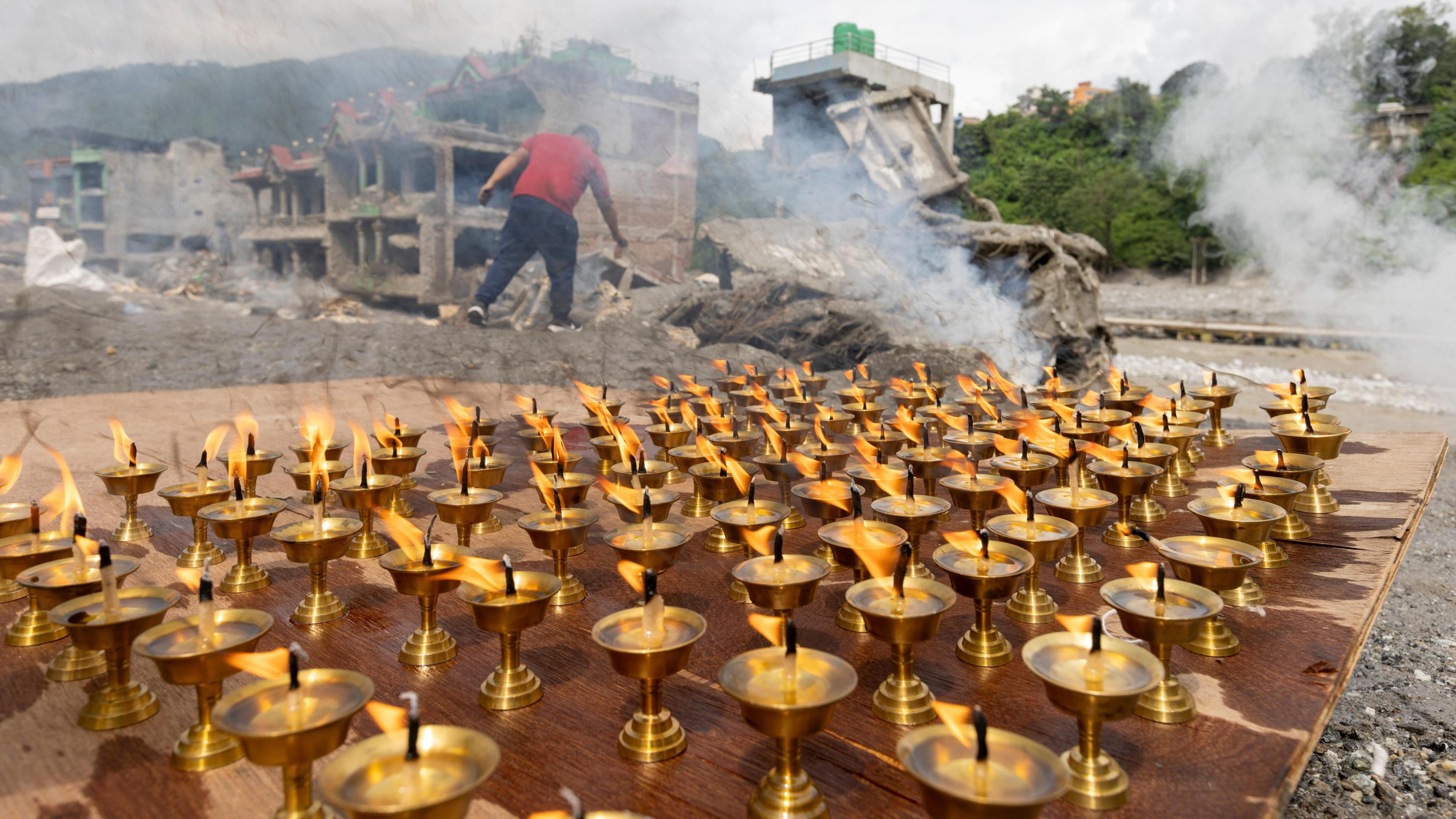
In the wake of a catastrophic flash flood that killed over 1,200 people and left thousands missing, Nepal observed a national day of mourning. Citizens lit candles at the close of a 13‑day Buddhist mourning ritual, while flags flew at half‑mast. Rescue teams continue search and rescue operations in flood‑stricken villages and hydropower tunnels, with hopes in the remains of survivors still anchored in the hardships of the region. The government declined to launch formal commemoration programs in favour of ongoing rescue efforts, as the president toured devastated areas.
On Sunday, Nepalis lit candles to mark the final day of the 13‑day Buddhist mourning period for the victims of a devastating flash flood. High‑altitude villages were lost to a sudden glacial collapse and the resulting torrent; the disaster claimed at least 1,287 lives and left more than 5,000 people unaccounted for.
The national flag was flown at half‑mast across government sites and foreign missions, while daily ceremonies at temples offered a moment of collective grief amid ongoing rescue work. Army spokesperson Raja Ram Basnet said the search would proceed with the same vigor as on day one, focusing on ground, air and tunnel operations.
Efforts in hydro‑electric tunnel networks remain precarious, with hundreds of workers trapped and a single rescued trio discovering survivors inside damaged structures. Australian tunnel rescue specialist Arnold Dix highlighted the complexity of simultaneous rescues across different sites.
In a recent rescue, a 64‑year‑old Nepali woman emerged from a mud‑buried building after her house was swallowed by a wall of ice, rock and mud more than ten days after the flood. While Chinese teams recovered dozens of bodies on the Tibetan side of the border, Nepal’s response continues to depend on international aid.
The nation’s president, Ram Chandra Paudel, toured the flood‑hit zones, underscoring the tragedy’s enduring impact. With rescue operations still underway, the government opted to postpone formal commemoration programs for the final day of mourning.