HONOLULU—An eerie shock rippled through Puna, a remote community on Hawaii’s Big Island that prides itself on free‑spirited, off‑grid living. Three men, all in their early 70s, were found dead under troubling circumstances, prompting the arrest of a 36‑year‑old suspect.
A 36‑year‑old man, Jacob Baker, was taken into custody on suspicion of murder, burglary and other charges less than 24 hours after a 69‑year‑old man was discovered partially submerged in a cement pond. The deceased men—Robert Shine, John Carse and Chitta Morse—were 69, 79 and 69 years old, respectively, with the third’s body recovered 19 miles from the others.
The killings sent shockwaves through the small, eclectic village, which thrives on an off‑grid, communal lifestyle that attracts those seeking freedom and simplicity. Residents were eyeing new details, seeking answers about why authorities targeted Baker.
Baker’s court record reveals a pattern of run‑ins with law enforcement. Friends say his last months on the island were marked by an escalating threat. Police reports noted that Baker had recently threatened two women at the farm, both of whom sought temporary restraining orders that were denied.
Three victims
Police identified the first victim as Robert Shine, while John Carse was the third confirmed dead. The 79‑year‑old victim remains pending positive identification but is believed to be Chitta Morse.
No confirmed link between the three except geography. The 79‑year‑old lived only a few hundred feet from the other victims.
Local life before the deaths
Friends of the men explain they moved to Puna to embrace the island’s off‑grid, tropical, communal ethos. A friend of Shine’s, drummer Donald Hyatt, recalled him dancing energetically at drum circles. “He loved life,” Hyatt said.
Morse had left Van Nuys for the island about 40 years ago to live and eat raw, fruit‑centric food. His farmland now produced a “fruit forest” of coconut, avocado and durian. The men often attended pot‑luck dinners and parties on Janelle Honer’s property, where Baker had lived in exchange for sharing work on high coconut trees.
Baker’s role
Baker had lived on Honer’s property for months trading work for lodging—common in the area. Reports said he left his cabin several months ago but returned claiming “squatter’s rights,” threatening the property owner and demanding protection from others. He was allegedly hiding at a makeshift camp near a bluff watched by locals.
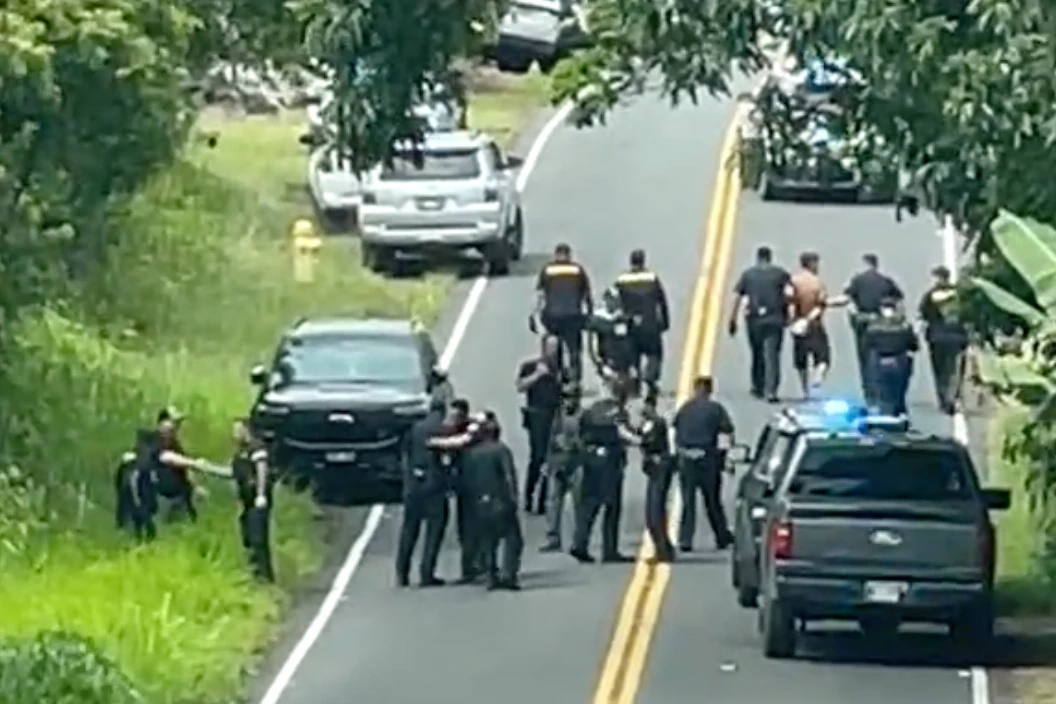
Police traced Baker using surveillance footage from neighboring property owners, Mark Wyatt and Richard Valdez. Their cameras captured Baker, shirtless and barefoot, trying to evade traffic. Spotting him, police arrested him a short distance away.
Community impact
In the weeks following the killings, Puna continued to struggle with drug use, poverty and limited resources, despite being a center for communal resilience. The community’s cultural resilience was tested by the sudden loss of its members.
A memorial gathering for the victims is planned next Saturday beside Honer’s place, organized with support from local residents and community leaders.
For more information, readers are advised to follow local police updates and contact the county council representative for updates regarding actions in the community.
---
Reported by: Collins, Hartford, Connecticut.
A 36‑year‑old man, Jacob Baker, was taken into custody on suspicion of murder, burglary and other charges less than 24 hours after a 69‑year‑old man was discovered partially submerged in a cement pond. The deceased men—Robert Shine, John Carse and Chitta Morse—were 69, 79 and 69 years old, respectively, with the third’s body recovered 19 miles from the others.
The killings sent shockwaves through the small, eclectic village, which thrives on an off‑grid, communal lifestyle that attracts those seeking freedom and simplicity. Residents were eyeing new details, seeking answers about why authorities targeted Baker.
Baker’s court record reveals a pattern of run‑ins with law enforcement. Friends say his last months on the island were marked by an escalating threat. Police reports noted that Baker had recently threatened two women at the farm, both of whom sought temporary restraining orders that were denied.
Three victims
Police identified the first victim as Robert Shine, while John Carse was the third confirmed dead. The 79‑year‑old victim remains pending positive identification but is believed to be Chitta Morse.
No confirmed link between the three except geography. The 79‑year‑old lived only a few hundred feet from the other victims.
Local life before the deaths
Friends of the men explain they moved to Puna to embrace the island’s off‑grid, tropical, communal ethos. A friend of Shine’s, drummer Donald Hyatt, recalled him dancing energetically at drum circles. “He loved life,” Hyatt said.
Morse had left Van Nuys for the island about 40 years ago to live and eat raw, fruit‑centric food. His farmland now produced a “fruit forest” of coconut, avocado and durian. The men often attended pot‑luck dinners and parties on Janelle Honer’s property, where Baker had lived in exchange for sharing work on high coconut trees.
Baker’s role
Baker had lived on Honer’s property for months trading work for lodging—common in the area. Reports said he left his cabin several months ago but returned claiming “squatter’s rights,” threatening the property owner and demanding protection from others. He was allegedly hiding at a makeshift camp near a bluff watched by locals.
Police traced Baker using surveillance footage from neighboring property owners, Mark Wyatt and Richard Valdez. Their cameras captured Baker, shirtless and barefoot, trying to evade traffic. Spotting him, police arrested him a short distance away.
Community impact
In the weeks following the killings, Puna continued to struggle with drug use, poverty and limited resources, despite being a center for communal resilience. The community’s cultural resilience was tested by the sudden loss of its members.
A memorial gathering for the victims is planned next Saturday beside Honer’s place, organized with support from local residents and community leaders.
For more information, readers are advised to follow local police updates and contact the county council representative for updates regarding actions in the community.
---
Reported by: Collins, Hartford, Connecticut.