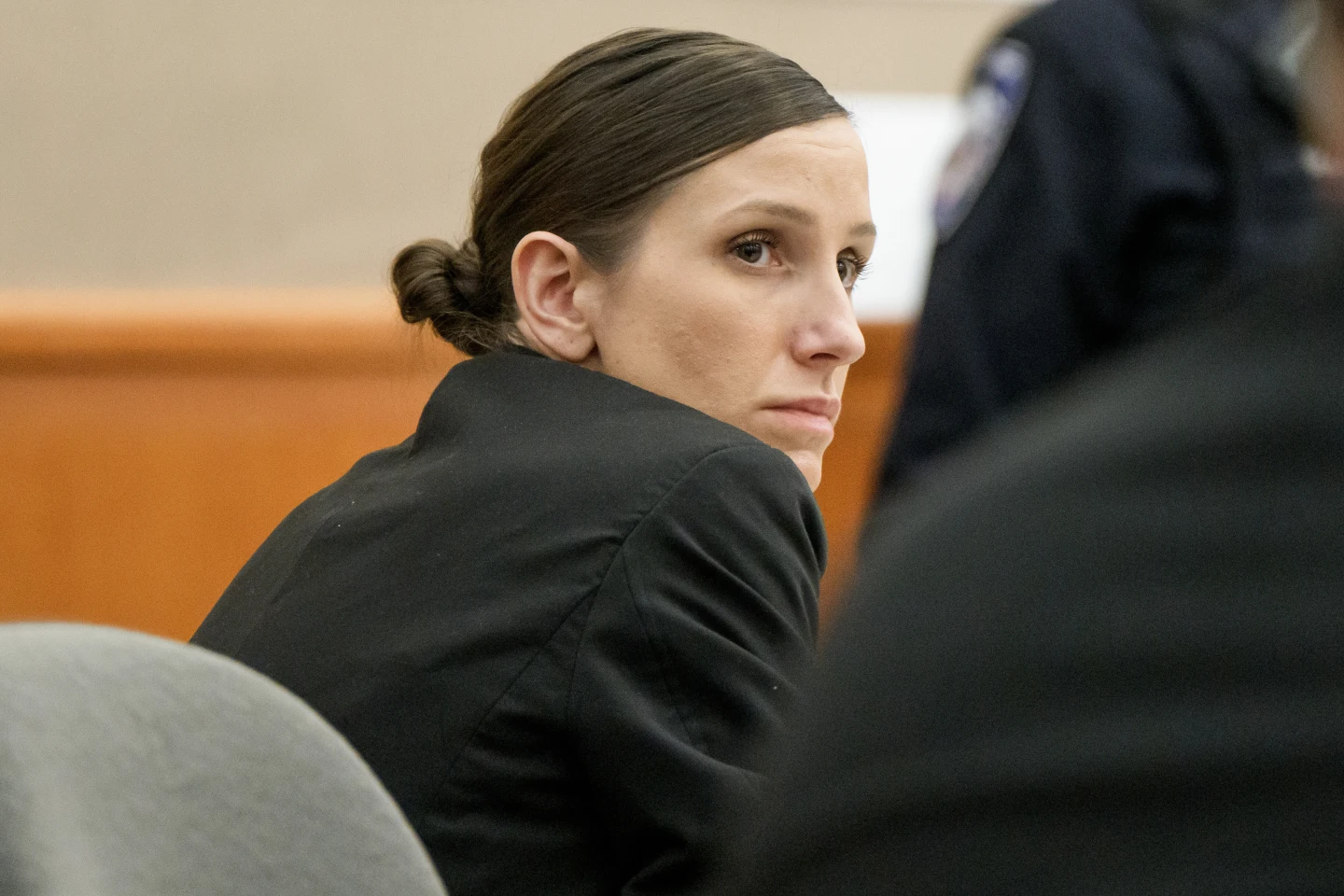
PARK CITY, Utah (AP) — Closing arguments are scheduled for Monday in the trial of Kouri Richins, a Utah woman who gained attention for writing a children’s book about grief after her husband's passing, now accused of his murder.
The trial, initially projected to last five weeks, was shortened when Richins opted not to testify, with her defense team resting its case without calling witnesses. Her attorneys expressed confidence that the prosecution has not presented substantial evidence for a murder conviction.
Richins, 35, is charged with slipping a lethal dose of fentanyl into a cocktail served to her husband, Eric Richins, resulting in his death in March 2022. She also faces charges of insurance fraud related to his death and a prior attempted murder case involving a fentanyl-laced sandwich given to him on Valentine’s Day. Richins has pleaded not guilty to all allegations.
The most severe of her charges, aggravated murder, carries a potential sentence of 25 years to life in prison.
Prosecutors aim to prove that financial motives drove Richins to murder her husband while she was secretly involved with another man. They contend she was in dire financial straits, with extensive debt, and had opened several life insurance policies worth millions without her husband's knowledge.
Text messages between Richins and her alleged lover indicate schemes to divorce Eric Richins and profit financially. Furthermore, online search histories from her device included alarming inquiries about fentanyl and its implications in fatal incidents.
Ironically, just prior to her arrest in May 2023, Richins published a children’s book titled “Are You with Me?” to help her kids cope with the loss of their father, which prosecutors argue indicates premeditated actions regarding the murder.
Detective Jeff O’Driscoll, the lead investigator on the case, testified about the ghostwriter she employed for her book. Prosecutors further introduced evidence of an anonymous letter sent to the sheriff's office that defended Richins, encapsulating the complexity of the narrative surrounding her case.
As the trial progresses, defense attorneys are attempting to undermine the credibility of key witnesses, arguing their motivations for testifying against Richins stem from personal interests rather than truth. In stark contrast, the prosecution's case weaves a narrative of deception and planned murder.
With the trial reaching its peak, the jury's decision looms, encapsulating the troubling juxtaposition between a grieving mother and an alleged murderer.