In brief
In a Massachusetts courtroom, nine jurors and three men could not reach a verdict in the case of Lindsay Clancy, who is charged with the murders of her three children. The judge issued a call‑back, encouraging the group to attempt a new line of reasoning and hinting at a possible "dynamite" instruction. Clancy’s defense cites postpartum psychosis as a claim for diminished responsibility, while prosecutors argue her actions were deliberate. The outcome could result in a mandatory life sentence, a lesser murder charge, or a judicially imposed psychiatric evaluation if found not guilty by reason of insanity. Experts note this reflects the complexity of trials where mental health intersects with criminal intent.
In a four‑day trial, the jury in Lindsay Clancy’s case could not agree on a final verdict, leaving the judge to ask them to return to deliberations and attempt a new approach.
Clancy, a Massachusetts resident, faces three counts of first‑degree murder for the January 2023 killings of her five‑year‑old daughter, three‑year‑old son and eight‑month‑old infant in a family home.
Her defense team argues that she suffered from postpartum psychosis at the time and could not distinguish right from wrong, a claim that seeks to mitigate criminal responsibility.
Judge William Sullivan, after reading the jury’s note of deadlock, thanked the members for their work and instructed them to return the next morning, hinting at a possible “dynamite” instruction, a tactic that encourages the jury to explore alternative perspectives in complex cases.
If a verdict is not reached, the judge may declare a mistrial. A guilty verdict for first‑degree murder would lead to a mandatory life sentence without parole; lesser charges of second‑degree murder or manslaughter would still carry significant prison time. An acquittal by reason of insanity would likely result in confinement in a psychiatric facility with periodic reviews.
Legal scholar Heather Cucolo notes that deadlocks often arise in emotionally charged trials, and the court’s final instruction aims to guide jurors toward a unanimous decision while respecting their genuine convictions.
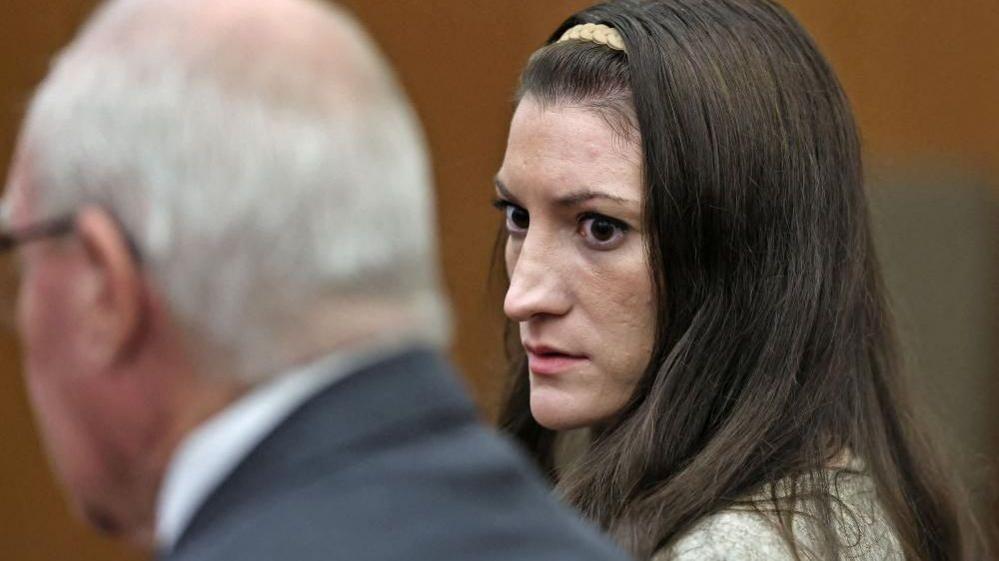
Clancy, who remains in a wheelchair after a jump from a second‑floor window, sat stoically beside her counsel as the court awaited a resolution that could alter the legal and humanitarian trajectory of this tragic case.