In brief
A powerful earthquake that struck Japan’s Kyushu island on Tuesday left a dead‑count of at least 13 and ignited more than 100 aftershocks. The quake’s shallow focus rattled the Kumamoto Prefecture, where a bustling Aeon Mall lost part of a story‑board floor and caused an explosion shortly after. Rescue crews are battling extreme heat, shattered infrastructure and suspects trapped under rubble while the Japan Meteorological Agency urges residents to brace for potential 7‑intensity shakes. Over 4,600 personnel have been deployed for search and rescue, and the government is supplying air‑conditioning units to keep survivors cool in the 35 °C heat.
Japan’s south‑western Kyushu island was shaken on Tuesday by a 7.1‑magnitude earthquake that left at least 13 people dead. The quake’s shallow epicentre, just 10 km deep, was located 20 km south of Kumamoto city.
The Kumamoto region has since experienced more than 100 aftershocks, a magnitude of 7.1 is still being refined but early reports from the Japan Meteorological Agency indicate possible 7‑intensity shocks for the next week or so.
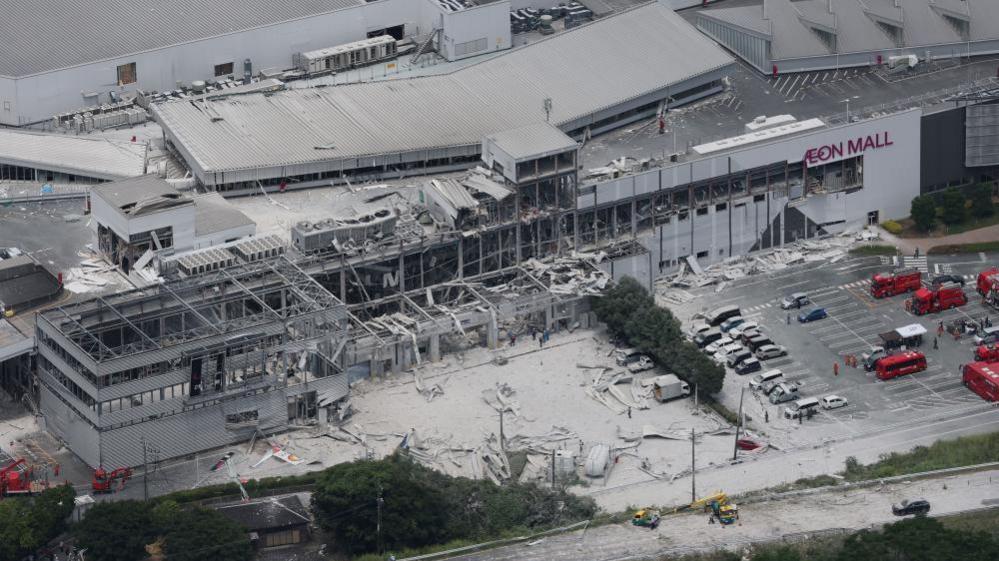
Rescue teams are working in the heat of the day, digging through rubble at a paper factory and a shopping mall, where a portion of the second floor of Aeon Mall collapsed and an explosion followed shortly after. The explosion left a cloud of white smoke as the building’s exterior was ripped away revealing steel beams.
Prime Minister Sanae Takaichi described the situation as a "race against time" to locate trapped survivors amid painful heat and power outages. She urged precautions against heatstroke as temperatures reached around 35 °C.
In Yatsushiro City, a factory was partially destroyed, killing two people and leaving nine others missing. The Japanese government has flown in around 300 air‑conditioning units to save lives in the worst hit areas.
At the Aeon Mall in Kashima three employees were reported missing; the mall’s president, Akio Yoshida, confirmed that three people died in the mall explosion. Four were taken to hospitals, with one in cardiac arrest. The mall employs roughly 2,700 staff.
As emergency crews inspect cracked roads, collapsed bridges, and burning buildings, the Japanese Ministry of Defense and the Japan Meteorological Agency continue monitoring the intensity of aftershocks, while public broadcasters like NHK broadcast footage of the disaster’s aftermath.