
In brief
As the Trump administration approaches, Somaliland citizens express hope for U.S. recognition of their independence, seeing Trump as a potential ally. However, this prospect raises concerns in Somalia about sovereignty and regional stability, with a divided opinion on the implications of U.S. policy changes.
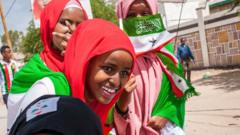
In Somaliland, there is a palpable sense of excitement about the incoming Trump presidency, with many harboring hopes that the U.S. could become the first nation to formally recognize their self-declared republic. Somaliland, which declared independence from Somalia 33 years ago amidst a civil war, has operated independently in many respects, yet remains internationally unrecognized. Aisha Ismail, a university student in Hargeisa, expresses hope, saying, “Donald is our saviour. He is a wise and practical man. God bless America.”Conversely, opinions differ significantly in Somalia's capital, Mogadishu. Abdi Mohamud, a data analyst there, voices skepticism: “I doubt Donald Trump knows what Somaliland is, never mind where it is,” illustrating the frustrations felt by some Somalis regarding the prospect of U.S. recognition for Somaliland. Despite these conflicting views, the potential for recognition isn’t merely wishful thinking; influential Republicans, such as Congressman Scott Perry, are advocating for Somaliland's independence.The discourse ramped up following the "Project 2025" report by the Heritage Foundation, which listed Somaliland as a key territory worthy of U.S. recognition in its African policy recommendations. However, the report's limited focus on sub-Saharan Africa raises concerns that those pushing for change may not prioritize the continent.Current U.S. policy has tended to favor a singular approach focused on Somalia. Yet, as time progresses, signs indicate a possible shift, which could have significant implications for the region. Abdi Mohamud's sentiment reflects a simmering tension, as he indicates that the acknowledgment of Somaliland's independence could destabilize existing political structures, inciting further separatist movements across the globe.Somali officials express fear of a repeat of U.S. military withdrawal, recalling the consequences after the infamous "Black Hawk Down" incident. Ali Omar Balcad, Somalia's State Minister for Foreign Affairs, warns that recognizing Somaliland's independence would undermine Somalia’s sovereignty, potentially creating a security vacuum in the region that could empower extremist groups.On the international front, Somaliland has engaged in discussions with Ethiopia regarding recognition in exchange for access to the sea, which has also caused unrest among Somalis. External geopolitical interests are complicating the situation, evidenced by recent lobbying efforts and the U.S.'s stand on UN resolutions concerning African Union interventions.As the Trump administration prepares to assume power, the dialogue surrounding Somaliland's status continues to unfold. With key Republican figures championing the territory’s cause, including those within Trump's circle, the potential recognition of Somaliland poses both opportunities and dangers, reflecting a broader context laden with national interests. Ken Menkhaus, a noted academic on Somali issues, remains cautious, suggesting that U.S. neo-isolationist sentiments could lead to significant shifts in policy regarding both Somaliland and Somalia alike.As the world watches closely, the evolving narrative of Somaliland and its place in U.S.-Africa relations may very well shape the political landscape of the Horn of Africa for years to come.
