In brief
A scientifically vetted discovery in the Democratic Republic of Congo has revealed a new species of colobus monkey, the Likweli, distinguishable by its bright pinkish‑orange lips. The species, named Colobus congoensis, has been documented through audio recordings, photographs and genetic analysis after an initial sighting in 2008. It represents only the fifth new African monkey species identified in 75 years, and it is now expected to receive official legal protection. Researchers plan to conduct detailed surveys to better understand its population and behavior.
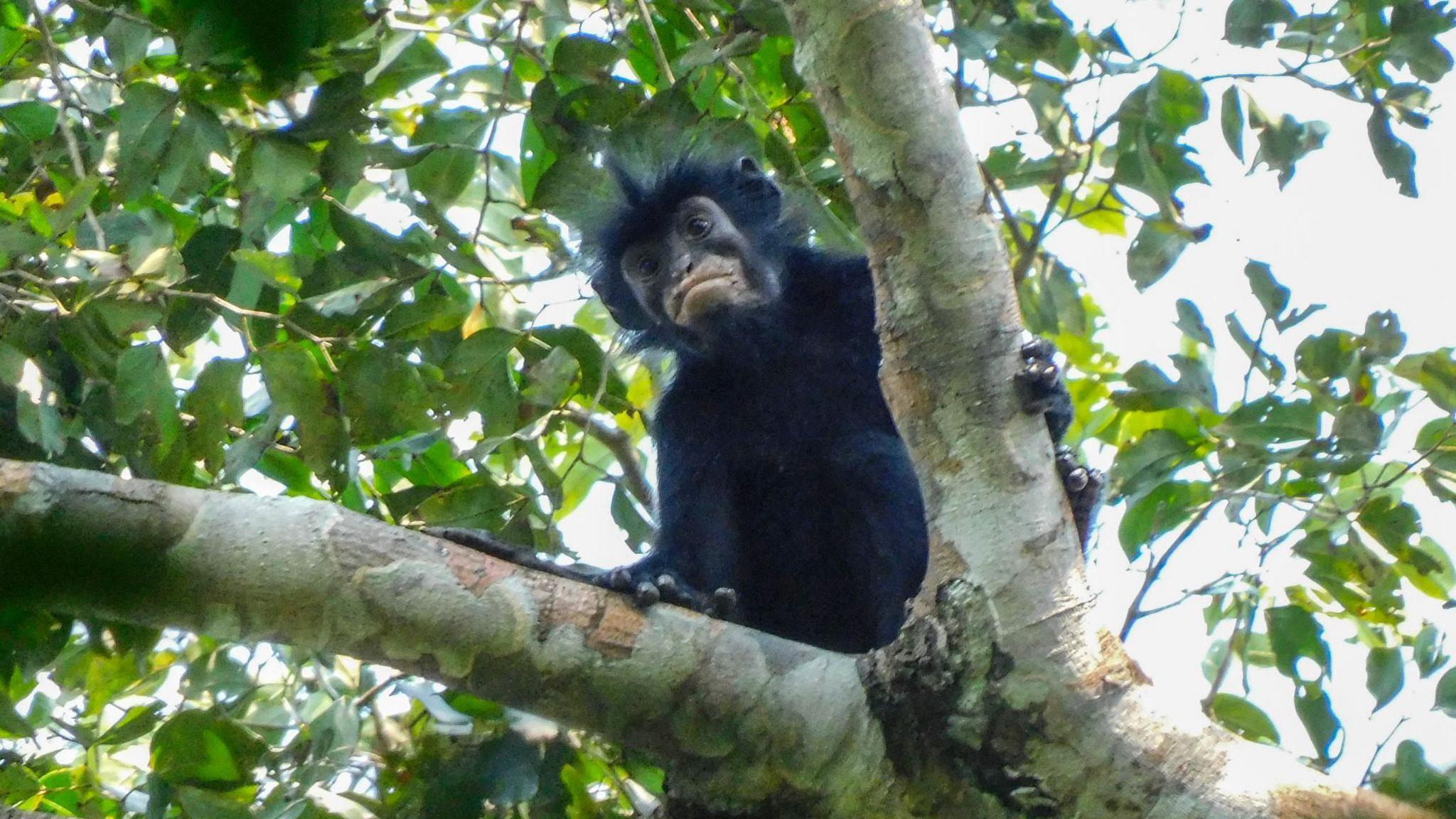
A new species of monkey has been confirmed in the heart of the Democratic Republic of Congo. The black‑furred primate, locally known as “Likweli,” boasts bright pinkish‑orange lips and a black face that set it apart. Scientists named it Colobus congoensis. The discovery came after researchers returned to Lomami National Park ten years after an initial blurry photo.
The team, led by Junior Amboko, combined audio recordings, photography and genetic analysis to prove the monkeys were a unique lineage. “It’s an amazing feeling to finally look straight into the face of a creature that few people had seen before,” Amboko told BBC News.
The species is one of only five new African monkeys identified in 75 years. The Likweli is shy, hiding high in the canopy; local villagers in only eight of 52 surveyed communities have ever seen it.
Researchers hope that recognition as a distinct species will protect these monkeys from hunting. Further studies will map their population and examine their behaviors in the dense rainforest.
“Their bright facial markings may serve as a visual signal, and their roaring call is an unmistakable presence in the canopy,” Prof. Kate Detwiler of Florida Atlantic University explained. “They are an essential part of seed processing and forest regeneration.”