
In brief
The International Criminal Court (ICC) has indicated that there are "reasonable grounds" to believe that war crimes and crimes against humanity are being committed in Sudan, particularly in Darfur, where sexual violence against specific ethnic groups has escalated. With many civilians caught in the midst of conflict, over 12 million people have been displaced since fighting resumed in April 2023 between the Sudanese army and the Rapid Support Forces (RSF). Reports detail widespread abuses, impunity among perpetrators, and a deteriorating humanitarian situation.
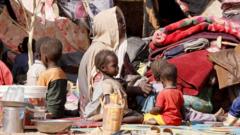
The International Criminal Court (ICC) has highlighted “reasonable grounds” to believe that war crimes and crimes against humanity are unfolding in western Sudan, particularly in the context of escalating violence between the Sudanese army and the Rapid Support Forces (RSF). The alarming findings come amid an ongoing investigation into crimes committed in Darfur, where incidents of sexual violence against women and girls from specific ethnicities have emerged as particularly disturbing.Since the outbreak of conflict in April 2023, which has led to catastrophic civilian casualties, the ICC has gathered over 7,000 pieces of evidence, according to Deputy Prosecutor Nazhat Shameem Khan. During a briefing at the United Nations Security Council, she remarked on the complexity of adequately describing the "depth of suffering" experienced in the region, further praising the courage of survivors who have shared their harrowing testimonies.The ICC’s mandate to investigate crimes in Darfur dates back two decades, focusing on war crimes and genocide committed since July 2002. Following the latest unrest, a new investigation was launched, as many victims fled the violence in Darfur to neighboring Chad. Khan disclosed an “inescapable pattern of offending,” indicating that those responsible for the ongoing atrocities may currently operate with a sense of impunity. Despite these challenges, she affirmed the ICC’s commitment to ensuring many perpetrators face justice.War crime allegations against the RSF persist, with the U.S. labeling the group as responsible for genocide against non-Arab populations in January 2025—an assertion the RSF has denied, describing the conflict as purely "tribal." Despite international attention, conditions in Darfur have reportedly deteriorated, including targeted assaults on hospitals and humanitarian convoys. The siege by RSF forces in el-Fasher has left civilians isolated from essential aid, while a cholera outbreak threatens limited water supplies. Concurrently, the UN’s children’s agency (UNICEF) revealed that over 40,000 children required treatment for severe acute malnutrition between January and May 2025, a figure that more than doubled year-on-year.Sheldon Yett from UNICEF voiced grave concerns, stating, "Children in Darfur are being starved by conflict and cut off from the very aid that could save them." The ongoing death toll has exceeded 150,000 in the last two years, with around 12 million people driven from their homes, prompting warnings that the situation could become even more dire.



