In brief
A fierce wildfire threatens Marseille, France's second-largest city, prompting the mobilization of around 1,000 firefighters. While 400 residents have been evacuated and some buildings burned, officials maintain that the situation is under control. As fires rage in other parts of France and Europe, authorities urge residents to stay indoors and heed safety protocols due to extreme weather conditions.
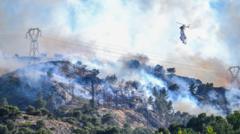
The city of Marseille is on high alert as a significant wildfire approaches its outskirts, with nearly a thousand firefighters engaged in relentless efforts to contain the blaze. The fire, which ignited earlier in the day near Pennes-Mirabeau, has already forced the evacuation of at least 400 residents and injured nine firefighters. Mayor Benoît Payan characterized their approach as "guerrilla warfare" against the advancing flames, while Bouches-du-Rhône prefect Georges-François Leclerc reported that firefighters are attempting to "defend" the city from further spread.The fire spread rapidly at rates of up to 1.2 kilometers per minute, fueled by a potent mix of wind gusts, dense vegetation, and steep terrain. Leclerc noted that firefighters have successfully protected hundreds of homes from destruction, despite around 20 structures being partially impacted. French President Emmanuel Macron, currently visiting the UK, expressed solidarity with the emergency crews and urged residents to adhere to safety guidelines.Local authorities warned residents to stay indoors, keep doors and windows closed, and clear streets for emergency vehicles. The wildfire, which has charred approximately 700 hectares, was initially sparked by a car fire on a nearby motorway. As strong winds are expected to persist, the risk of the blaze expanding remains.Meanwhile, Marseille Provence Airport, which had been closed earlier due to the fire, has partially reopened. Airport president Julien Coffinier remarked that this incident marked an unprecedented emergency situation for the facility. Residents voiced their concerns about the striking and apocalyptic nature of the unfolding disaster, with one local stating that many had already evacuated the area.In the broader context, wildfires are also raging across other parts of France and Europe. A fire near Narbonne continues to burn, having consumed around 2,000 hectares, while areas in Spain and Greece are facing similar crises due to soaring temperatures and dry conditions. With much of western and southern Europe enduring a heatwave, the situation presents challenging circumstances for firefighting efforts across the continent.