In brief
The government's ambitious plan aims to vaccinate millions of cattle and goats, but misinformation and political protests are complicating the rollout.
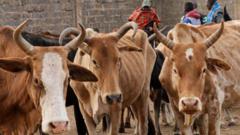
In Kenya, a government initiative to vaccinate livestock is facing significant backlash from farmers, who are expressing their concerns through protests and social media campaigns. The vaccination drive, aimed at protecting at least 22 million cattle and 50 million goats and sheep, is being described as essential for disease control and potential export eligibility. However, it has sparked fierce opposition due to misleading claims circulating amongst the farming communities.Farmers like Robert Nkukuu from Nakuru county have reported hostility towards those supporting the vaccination program. "If the community learns you are pro-vaccination, they will slay you just now," he asserted, illustrating the charged atmosphere surrounding the initiative. Despite the government's assurance that vaccinations will be free for farmers, skepticism persists, primarily fueled by misinformation regarding the vaccines’ origins and alleged foreign influence.Prominent figures have amplified doubts, with some suggesting that the initiative is linked to Bill Gates and aimed at controlling methane emissions from livestock. However, officials from Kenya's agriculture ministry categorically denied any involvement from Gates, emphasizing that the vaccines are essential to combat diseases like foot-and-mouth and peste des petits ruminants.The concerns are underscored by widely circulated conspiracy theories claiming that the vaccines could genetically alter livestock or are part of a foreign agenda. Opposition leaders have echoed these sentiments, declaring the campaign to be a "violation of the constitution." However, agricultural experts like Professor Ermias Kebreab have clarified that there is no current livestock vaccine capable of altering the genetic makeup of animals.The Kenyan government is being urged to improve communication strategies as trust in leadership has diminished following various controversies. Misleading narratives have burgeoned, prompting misinformation to proliferate especially during the early announcement phases of the campaign. This surge in conspiracy theories has been tracked closely on social media platforms where discussions about Gates and livestock have escalated dramatically.While some farmers remain apprehensive, others, including small-scale farmers, have expressed support for the initiative but call for greater transparency regarding the vaccination process. The government's agriculture minister has pledged to make the vaccination voluntary and engage stakeholders actively in combating misinformation. Nevertheless, the pushback against the vaccination campaign reflects a microcosm of broader tensions surrounding governmental credibility and the portrayal of foreign influences in local policies.