In brief
On 14 August 2018 a section of the Morandi viaduct collapsed, killing 43 people including a newly married family. Eight years later relatives closed in a Genoa courtroom, hoping a verdict will finally pin responsibilities. The trial has already seen 57 defendants, from toll‑road executives to engineers, face charges ranging from manslaughter to document forgery. Meanwhile the old viaduct was demolished and a modern replacement opened in 2020, but the families still seek closure and accountability.
On 14 August 2018, a section of the Morandi viaduct suddenly collapsed during a summer storm, sending cars, lorries and a newly‑wedded family plunging onto the railway tracks below. The disaster obliterated 43 lives, including 47‑year‑old Claudia Possetti, her two children and her new husband. That tragedy, until now the most deadly infrastructure failure in Italy’s recent history, has left relatives scrambling for answers.
Nearly eight years later, families of the victims are gathering in a Genoa courtroom on Thursday for a first‑instance verdict in a trial that is already among Italy’s longest criminal cases. Egle Possetti, Claudia’s sister and leading voice for the victim families, said she feels anxious and emotional, hoping the judge will finally see who bears responsibility for the collapse. Her father is also expected to attend, having survived the loss of his wife and children.
The prosecution argues that maintenance was repeatedly delayed before the event, and that companies ran profit lines while ignoring warning signs. Defence lawyers insist a design flaw in a single steel cable caused the failure, arguing that the cable was encased in concrete and beyond the reach of upkeep. Fifty‑seven defendants, including former executives of the toll‑road operator Autostrade per l’Italia and its parent company Atlantia, engineers from the maintenance firm Spea, and former transport ministry officials, already stand trial. All defendants deny wrongdoing, and many charges will later lapse under the statute of limitations.
The verdict, expected at the end of the proceedings, could finally settle the question of liability and provide victims’ relatives with a sense of closure. In the interim, the company owning the viaduct has issued its first apology, with chief executive Arrigo Giana calling the company’s previous silence an “incomprehensible wound” for a community already in shock. The old viaduct was demolished in 2019, and a new bridge, designed by Renzo Piano, opened in August 2020. A new structure, with sail‑like white pillars, aims to honor Genoa’s maritime heritage while preventing future disaster.
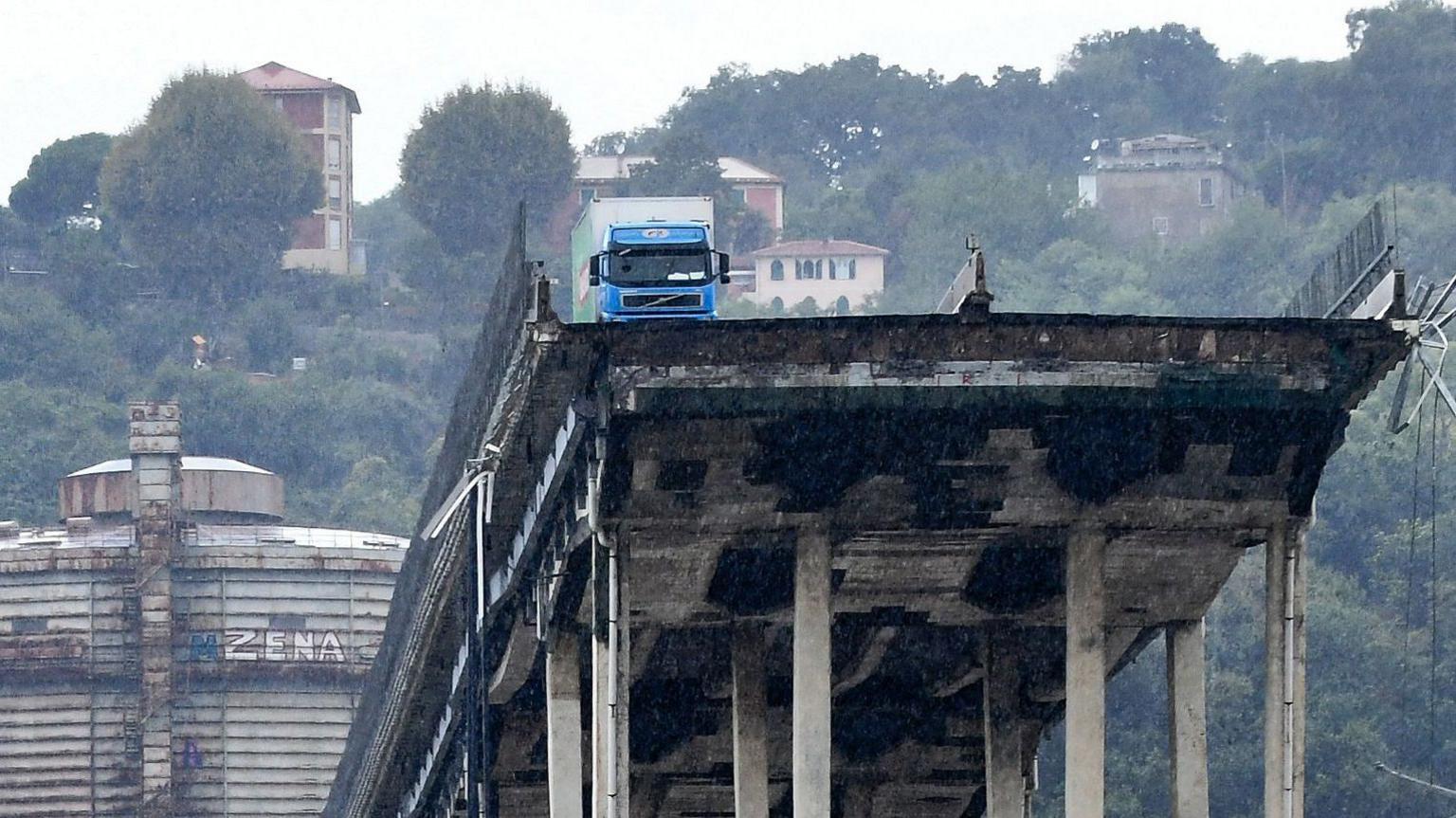
A lorry perched on the Genoa bridge after its collapse, one of the 43 people killed on that day.
The families’ committee is due to hold a press conference in Genoa after the verdict, seeking official confirmation that accountability has finally been assigned. They welcome any sign that the courts will deliver the justice they have long endured and that they can begin the healing process that had been stalled for years by legal delays and uncertainty.