
In brief
As rebel forces oust Bashar al-Assad, Syrian refugee Douna Haj Ahmed discovers the painful details of her husband Abdullah's detention in Al-Khatib prison. Their emotional revelations highlight the personal toll of Syria’s brutal civil war, shedding light on the horrors of torture and resilience in the face of adversity.
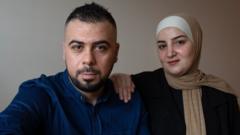
Douna Haj Ahmed, a Syrian refugee, faced an emotional reckoning this past December when she stumbled upon her husband Abdullah Al Nofal's disturbing past while watching news coverage of prisoners escaping Syria's oppressive regime. Abdullah, her husband of eight years, broke down beside her, revealing for the first time the horrors he endured at Al-Khatib prison, known as "Hell on Earth." Douna, herself a victim of the conflict with brothers arrested during the war, knew of Abdullah's experiences but had never heard the full story until that moment. "Abdullah does not like to share things emotionally," she recounted. "This was a turning point. I saw him weak and crying, saying: 'This is where I was. I could be one of them. I could be dead.'" The couple's story began in July 2013 when Abdullah, a storekeeper for the International Committee of the Red Cross in Damascus, was detained at a checkpoint. His involvement in initial protests in 2011 had put him at risk, forcing him to retreat as violence escalated. He detailed how he was blindfolded and handcuffed, subjected to solitary confinement for three days before being taken to Al-Khatib where he was held with around 130 other prisoners. Abdullah's time in the detention center is a grim reminder of the fate faced by many during Syria’s civil war; an estimated 60,000 individuals were tortured and killed in similar facilities. A historic trial in Germany recently convicted a former colonel linked to such abuses, yet the Assad regime continues to deny these allegations.Describing the neglect and brutality he witnessed, Abdullah remembered hearing screams of torture. "I felt so lonely. When I started looking around, there were people almost naked, covered in blood," he said. He shared how detainees would return from interrogation severely injured, only to experience further torture. His desperate efforts to survive led him to fabricate a story to escape further torment, resulting in his release after a month. Years later, he found refuge in London with Douna, where he has slowly begun to share his painful past. Now, with the regime behind them, the couple feels empowered to speak out. "We can tell the full story," Abdullah stated, as Douna expressed her heartache upon hearing the details. Her journey through understanding her husband's trauma echoes a broader narrative among survivors who feel the urgency of sharing their stories, knowing many do not have that privilege. The couple's story serves as an important reminder of the resilience found amid despair and the necessity of giving a voice to the silenced victims of war.


