
In brief
Douna Haj Ahmed discovered her husband's traumatic past in Syria after Assad's regime was ousted. Abdullah Al Nofal recounted his detention in Al-Khatib prison, revealing the brutal treatment he endured and the emotional toll it took on him, highlighting the need for Syrian stories to be heard.
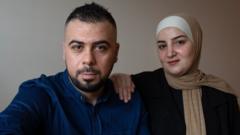
In early December, Douna Haj Ahmed, a Syrian refugee residing in London, unearthed horrifying revelations about her husband’s past during his detention in the infamous Al-Khatib prison, which is often referred to as "Hell on Earth." The catalyst for this painful discovery came while they were watching the news, where prisoners were seen escaping from Syria's oppressive security forces following the fall of Bashar al-Assad. The heartbreak intensified when her husband, Abdullah Al Nofal, pointed to the screen and said, "This is where I was arrested."For both Douna and Abdullah, this moment served as a significant emotional turning point. Abdullah, previously reluctant to open up about his past, finally shared the haunting details of his experiences. "I saw him weak. I saw him crying," Douna expressed, recounting the moment that triggered her husband to confront his demons.Abdullah, 36, was working with the International Committee of the Red Cross in Damascus when he was apprehended in July 2013. Despite participating in peaceful protests that began in 2011, he distanced himself from the violence that ensued. After being singled out at a checkpoint, he was taken into custody, enduring a three-day solitary confinement filled with brutal beatings and psychological torment. Al-Khatib prison became his new reality, a place with over 130 inmates suffering from the atrocities inflicted by the Syrian regime. Reports indicate that around 60,000 people have met similarly grim fates within Assad's prisons during the civil war, as documented by the Syrian Observatory for Human Rights. In a landmark trial in Germany, a former colonel from Al-Khatib was found guilty of crimes against humanity, reflecting the systemic brutality of the regime.During his month-long detention, Abdullah was subjected to relentless torture while witnessing the suffering of fellow inmates. "Every minute it's like you're dying," he admitted, recalling the horrific sounds and sights of those around him, many of whom bore wounds from the violence inflicted upon them.Miraculously, Abdullah managed to secure his release and subsequently sought refuge outside Syria, eventually finding a new home in London with Douna. Only now, feeling less threatened by his past, does he feel liberated enough to disclose the full extent of his story. "We are really free right now," he affirmed, hopeful that sharing their experiences would give a voice to those who suffered in silence.Douna, an outspoken human rights activist, expressed heartbreak upon learning the full reality of her husband's ordeal. "I thought there couldn’t be worse stories... but it surprises me that there could be more." They recognize their privilege in the ability to tell their tale, a luxury denied to countless others who did not survive the horrors of the regime.

