In brief
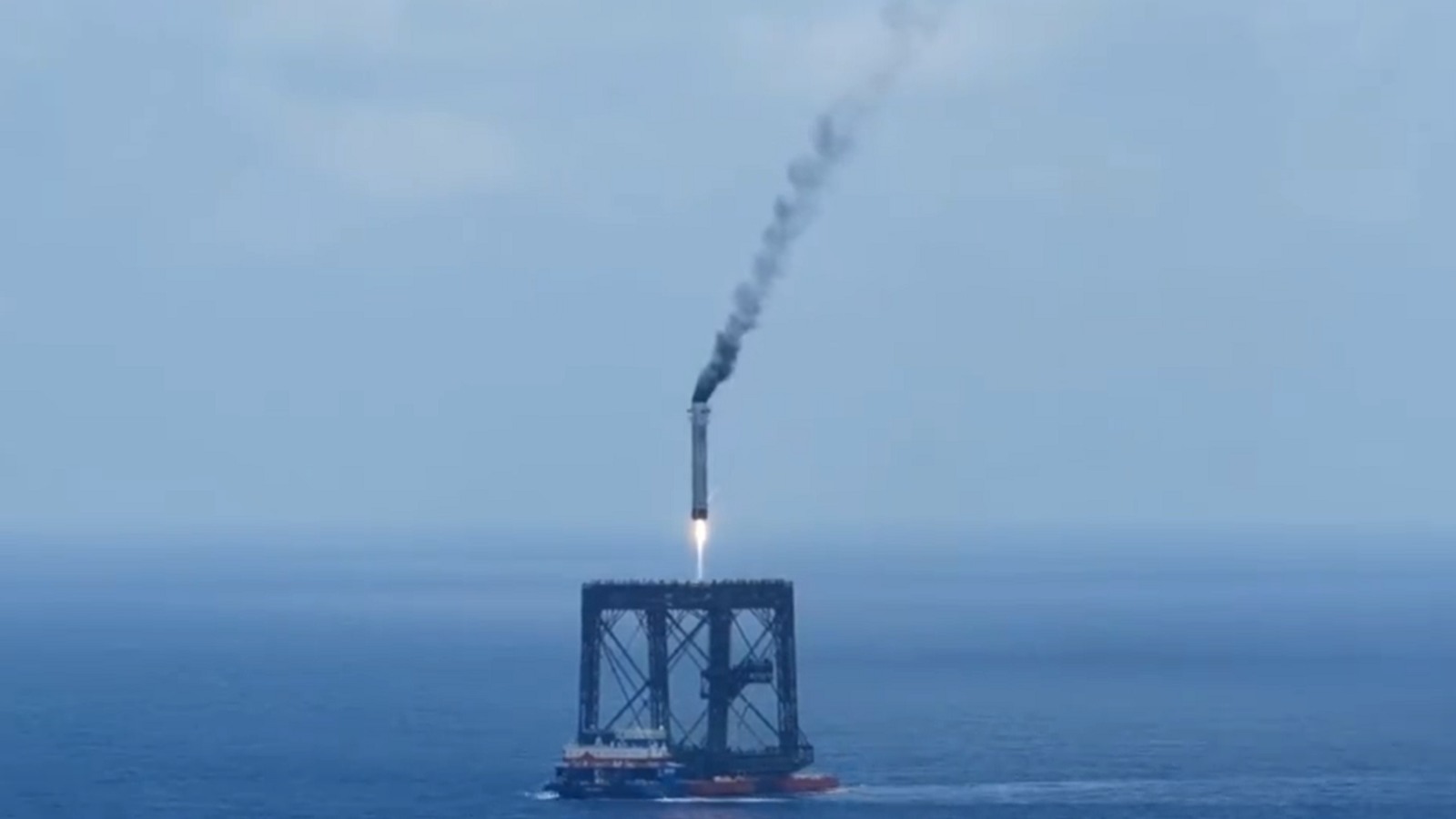
The China Aerospace Science and Technology Corporation announced that the Long March 10B booster successfully returned to Earth and was recovered on a floating platform, marking China's first reusable rocket landing. The launch, which took place from Hainan, demonstrated China's growing expertise in rocket reusability, a critical factor for reducing launch costs. Analysts note that the achievement positions China to compete with established reusable rocket operators such as SpaceX and Blue Origin, while industry stocks in Chinese space firms saw a sharp rise following the news.
China’s space agency announced that the Long March 10B booster has successfully landed on a floating recovery platform, a milestone that could redefine the country’s approach to satellite launches.
The launch departed from Hainan east of Guangzhou at 12:15 local time (04:15 GMT) on Friday. Within roughly six minutes after separation, the first-stage booster descended back to Earth and attached itself to a net on a maritime platform in the South China Sea.
Reusable boosters cut launch costs by keeping the most expensive part of the rocket intact. The move is deemed a significant step toward China catching up with the advanced reusable technologies pioneered by SpaceX’s Falcon 9 and Amazon-owned Blue Origin.
The Long March 10B is capable of delivering at least 16 metric‑tens to low‑Earth orbit and has been compared to Falcon 9, though it relies on a floating net rather than an autonomous ground or ship landing gear. It’s the second Chinese rocket designed for reuse; the earlier Long March 10A successfully splashed down in 2024.
Following the announcement, shares of China Spacesat and China Satellite Communications jumped 10% each – the daily cap of the Chinese market. The market’s rapid reaction suggests that investors see the launch as a marker of long‑term cost reductions for satellite deployment.
The successful landing adds a new player to the global race for reusable launch vehicles. Analysts warn that the race to reduce orbital launch costs could accelerate, potentially reshaping the economics of future space missions. China’s achievement signals that the country will be a more formidable contender in the next era of space exploration.