In brief
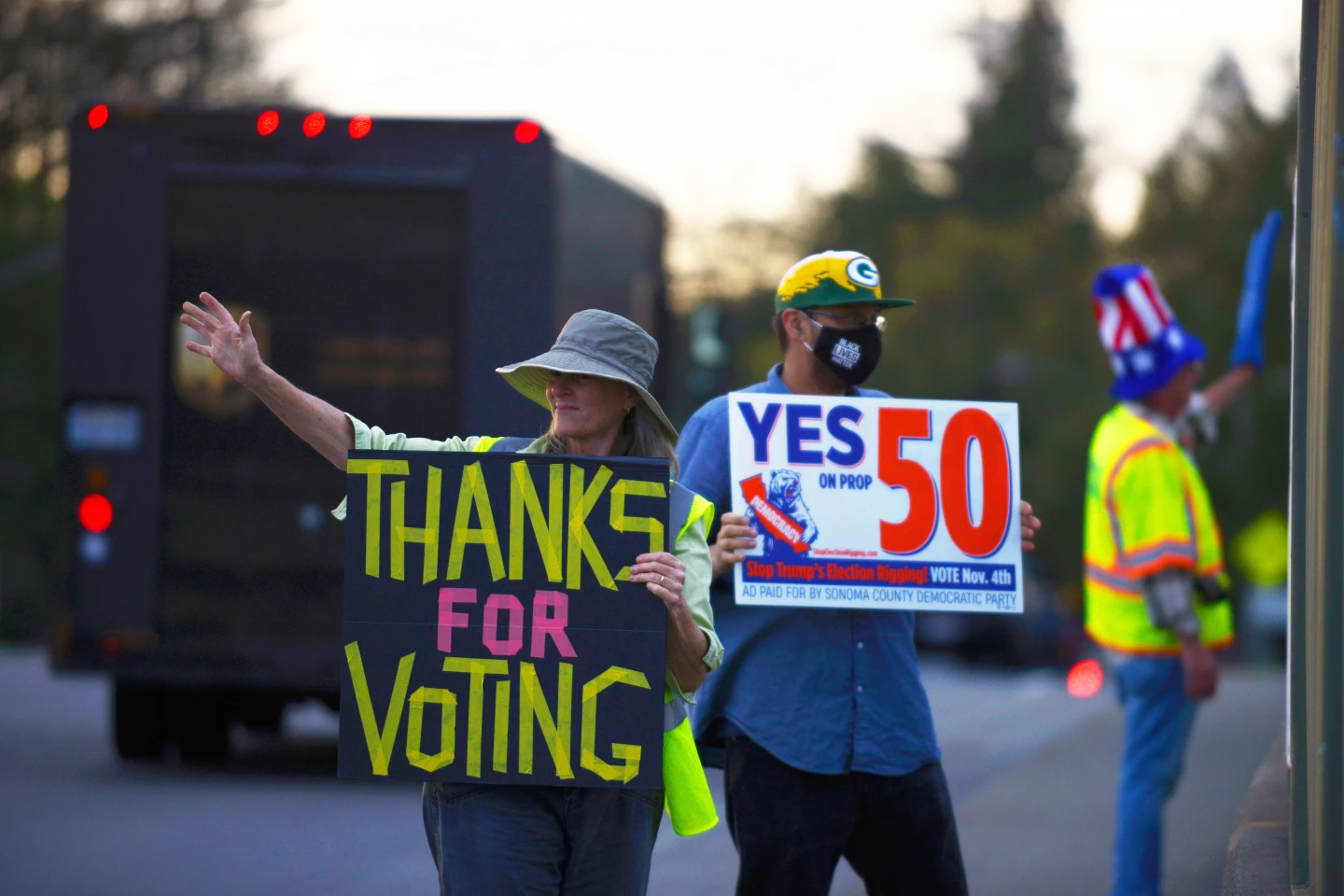
On Election Day 2025, California voters are deciding on Proposition 50, a measure that could redraw congressional district maps to favor Democrats. The initiative, backed by Governor Gavin Newsom and former President Obama, aims to overturn gerrymandered boundaries and enhance Democratic representation. Critics, including former Governor Arnold Schwarzenegger, argue it represents a power grab. With significant national implications, this ballot measure is pivotal in the ongoing battle for control of the U.S. House.
Election Day 2025 Coverage
The national political landscape is shifting as California voters approach a critical decision regarding Proposition 50. This measure, if passed, could significantly alter the state's congressional map and potentially eliminate five Republican-held districts ahead of the 2026 midterm elections.
The implications of this vote extend beyond California, as Democrats aim to reclaim the House of Representatives and hinder Republican strategies orchestrated by former President Donald Trump. Governor Gavin Newsom has emphasized the importance of this election, stating, God help us if we lose in California. The ripple effect of a Democratic win here could drastically impact Trump's agenda.
What Proposition 50 Entails
Proposition 50 seeks to invalidate district maps established by an independent commission, instead implementing boundaries devised by the Democratic-controlled legislature. This proposed configuration aims to undermine Republican voting power by strategically altering district compositions.
High-profile endorsements have poured in for the measure, with both Newsom and Obama advocating for its passage as a counteraction to Republican gerrymandering. Newsom's call to arms has framed the initiative as a necessary defense against Republican dominance in state politics.
Opposition and Debate
The measure has ignited controversy, drawing criticism from those who view it as a Democratic power grab. Notable opponents like Arnold Schwarzenegger have expressed concerns that this approach compromises democratic integrity. Critics argue that retaliating against Republican gerrymandering by implementing similar tactics presents moral contradictions.
With both sides heavily investing in campaigning—Democrats leading in ad expenditures—this ballot measure is pivotal in the broader context of U.S. House control.
The Bigger Picture
As Election Day unfolds, the fate of Proposition 50 will remain in limelight, with broader implications for both state and national politics at stake. Voter turnout and perceptions of this initiative will likely dictate the future political landscape as parties gear up for the consequential 2026 elections.