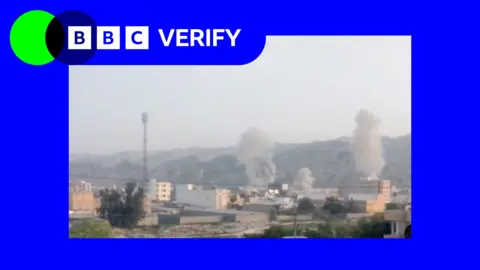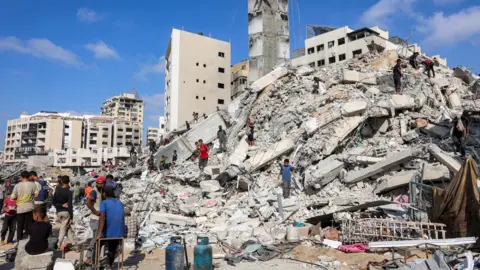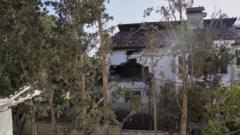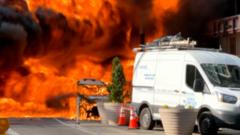
A catastrophic magnitude 8.2 earthquake violently struck Japan's Pacific coast early Tuesday morning, triggering widespread devastation and tsunami warnings that have left thousands stranded. According to the Japan Meteorological Agency (JMA), the quake hit at 03:45 UTC with its epicenter located 150 kilometers east of Tokyo, causing catastrophic shaking across the Tokyo metropolitan area and eastern coastal regions. The US Geological Survey (USGS) confirmed the seismic event as Japan's strongest since the 2011 Tohoku disaster, with preliminary reports indicating an estimated 70,000 structures damaged or destroyed in the hardest-hit areas.
Critical infrastructure has collapsed in multiple regions: Tokyo's Yurakucho Station was reduced to rubble, the Tokyo Metro network is paralyzed, and 45% of Kyushu's power grid was knocked offline. Coastal communities face immediate threats as tsunami warnings remain active, with the JMA forecasting waves up to 3 meters high. Emergency services report 12 confirmed fatalities and over 300 injuries, primarily in Iwate and Miyagi prefectures. The Japan Self-Defense Forces have deployed over 2,500 personnel to rescue stranded residents, while 200,000 evacuees remain in temporary shelters.
International aid is mobilizing rapidly; the U.S. Coast Guard dispatched a rescue vessel to Japan, and the UN Office for the Coordination of Humanitarian Affairs activated emergency protocols. Scientists warn this is part of a seismic 'tsunami cascade' with over 200 aftershocks recorded since the main quake. Climate experts caution that the region's recent warming trends may be exacerbating fault-line instability, though this remains under investigation. Authorities have urged residents to avoid all coastal zones until tsunami threats lift, while Tokyo's mayor warned of potential 'long-term displacement' for affected communities. This event has been declared a national emergency under Japan's Special Measures Act, with Prime Minister Fumio Kishida promising immediate government support for recovery efforts.}
Critical infrastructure has collapsed in multiple regions: Tokyo's Yurakucho Station was reduced to rubble, the Tokyo Metro network is paralyzed, and 45% of Kyushu's power grid was knocked offline. Coastal communities face immediate threats as tsunami warnings remain active, with the JMA forecasting waves up to 3 meters high. Emergency services report 12 confirmed fatalities and over 300 injuries, primarily in Iwate and Miyagi prefectures. The Japan Self-Defense Forces have deployed over 2,500 personnel to rescue stranded residents, while 200,000 evacuees remain in temporary shelters.
International aid is mobilizing rapidly; the U.S. Coast Guard dispatched a rescue vessel to Japan, and the UN Office for the Coordination of Humanitarian Affairs activated emergency protocols. Scientists warn this is part of a seismic 'tsunami cascade' with over 200 aftershocks recorded since the main quake. Climate experts caution that the region's recent warming trends may be exacerbating fault-line instability, though this remains under investigation. Authorities have urged residents to avoid all coastal zones until tsunami threats lift, while Tokyo's mayor warned of potential 'long-term displacement' for affected communities. This event has been declared a national emergency under Japan's Special Measures Act, with Prime Minister Fumio Kishida promising immediate government support for recovery efforts.}