In brief
Blue Origin has halted operations of its New Glenn rocket after the Federal Aviation Administration (FAA) mandated an investigation into a mishap involving a satellite launch intended for AST SpaceMobile. The incident revealed a lack of sufficient thrust in the rocket's engine, preventing the satellite from reaching the necessary orbit. As a result, the mission has been deemed unsuccessful, impacting AST SpaceMobile's stock and future connectivity services. Blue Origin aims to conduct a thorough investigation to implement necessary corrections and resume flight operations soon.
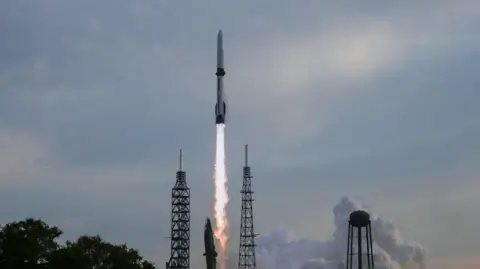
Blue Origin's newest rocket has been grounded after the Federal Aviation Administration (FAA) ordered an investigation into a mishap involving the failed launch of a satellite. The company, founded by Amazon billionaire Jeff Bezos, attempted to place a satellite from AST SpaceMobile using its New Glenn rocket but was unable to get it as far into orbit as intended. Blue Origin's chief executive Dave Limp said the failure was caused by a lack of sufficient thrust in an engine. AST SpaceMobile's share price fell by more than 6% on Monday. Limp acknowledged the unmet expectations: We clearly didn't deliver the mission our customer wanted, and our team expects.Blue Origin is investigating the incident, which happened on Sunday, under FAA oversight. The FAA confirmed its requirement for Blue Origin to conduct a mishap investigation, stating that it will be involved in every step and must approve the final report and any corrective actions.Limp mentioned that this investigation will help the company learn from the data and implement the improvements needed to quickly return to flight operations. The FAA will decide when the New Glenn rocket can launch again based on the investigation's findings. The mishap marks just the third flight for the New Glenn rocket, which was scheduled for a dozen launches this year. The rocket was supposed to carry an AST satellite aimed at providing low Earth orbit mobile phone connectivity. Since it failed to deliver the satellite to its required orbit, the asset is now deemed unusable. AST noted that the loss would be covered by insurance but did not disclose the financial implications. The increasing interest in satellites catering to connectivity, especially in hard-to-reach areas, signifies a competitive landscape as Blue Origin aims to launch thousands of such satellites through its TerraWave project. Meanwhile, Amazon is also expanding its presence in the sector after acquiring a satellite manufacturer for $11 billion, in an effort to build its own network dubbed Leo. These initiatives appear to be attempts to catch up with Elon Musk's Starlink, which already has thousands of operational satellites providing consumer connectivity.