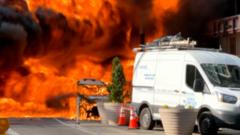
In a unprecedented cyber incident, a sophisticated attack originating from Eastern Europe has triggered cascading failures across Europe's critical energy infrastructure. The European Energy Network (EEN), which manages cross-border power distribution for 19 member states, confirmed at 03:47 GMT that its central control systems were hijacked by a malware dubbed 'NexusStrike.' The attack began at 22:15 GMT Tuesday and within 45 minutes had severed connections to 12 national grids, causing immediate blackouts in Germany's industrial heartland and the French Alps.
Emergency services report over 3,000 medical facilities affected, with ventilators and life-support systems at risk in Paris and Berlin. Transport networks ground to a halt - the Rhine River shipping corridor stalled, while 1.2 million train passengers were stranded after rail signaling systems failed. Chancellor Olaf Scholz declared a national cyber emergency, while France's President Macron activated the 'CyberShield' protocol for rapid military cyber response.
Cybersecurity analysts at ThreatShield detected multiple intrusion vectors: a phishing campaign targeting EEN engineers combined with a zero-day exploit in grid management software. 'This is not just a data breach - it's a physical infrastructure assault,' warned Dr. Lena Rodriguez, threat intelligence lead. 'The attackers deliberately targeted critical nodes to maximize chaos. We've seen similar tactics in Ukraine's 2022 grid attacks, but this scale is unprecedented.'
The European Commission has launched an emergency summit while NATO's Cyber Operations Unit dispatched teams to assist. Over 40 million citizens remain in darkness as EEN estimates full restoration will take 3-5 days. Authorities urge residents to avoid traveling, save battery power for essential devices, and report unusual activity via the emergency hotline #112C. The incident has sparked fears of prolonged energy shortages and potential economic fallout across EU markets.}
Emergency services report over 3,000 medical facilities affected, with ventilators and life-support systems at risk in Paris and Berlin. Transport networks ground to a halt - the Rhine River shipping corridor stalled, while 1.2 million train passengers were stranded after rail signaling systems failed. Chancellor Olaf Scholz declared a national cyber emergency, while France's President Macron activated the 'CyberShield' protocol for rapid military cyber response.
Cybersecurity analysts at ThreatShield detected multiple intrusion vectors: a phishing campaign targeting EEN engineers combined with a zero-day exploit in grid management software. 'This is not just a data breach - it's a physical infrastructure assault,' warned Dr. Lena Rodriguez, threat intelligence lead. 'The attackers deliberately targeted critical nodes to maximize chaos. We've seen similar tactics in Ukraine's 2022 grid attacks, but this scale is unprecedented.'
The European Commission has launched an emergency summit while NATO's Cyber Operations Unit dispatched teams to assist. Over 40 million citizens remain in darkness as EEN estimates full restoration will take 3-5 days. Authorities urge residents to avoid traveling, save battery power for essential devices, and report unusual activity via the emergency hotline #112C. The incident has sparked fears of prolonged energy shortages and potential economic fallout across EU markets.}