In brief
The Foundation for Aviation Safety has presented findings to the US Senate, alleging that the Air India Boeing 787 Dreamliner was plagued by multiple technical issues before its crash, including an in-flight fire. The official investigation continues, but claims about the plane's past failures raise questions about Boeing's safety practices and the aircraft's design. The report highlights significant concerns within the aviation industry regarding the safety culture at Boeing.
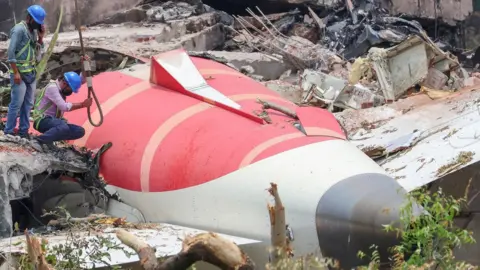
Aviation safety campaigners in the United States assert that the Boeing 787 Dreamliner involved in a deadly Air India crash in June 2025 had a troubling history of technical failures, including a significant in-flight fire. The incident, which resulted in the unfortunate deaths of 260 passengers and crew shortly after takeoff from Ahmedabad towards London, has sparked renewed scrutiny over Boeing's practices.The Foundation for Aviation Safety (FAS) has formally submitted its findings to the US Senate, detailing issues based on documents they claim to have obtained. While the official investigation is still ongoing, interim findings released by the Indian authorities have already created a stir regarding the circumstances surrounding the crash.Notably, the aircraft, registered as VT-ANB, was one of the earlier models of the Boeing 787, entering service in 2014. The FAS suggests that the plane suffered from a range of technical issues from day one, citing engineering and manufacturing problems that led to recurring mechanical failures. Among the highlighted issues were electronic faults, wiring damage, overheating components, and, significantly, an in-flight fire in 2022 linked to its power distribution system.As investigations continue, the focus has sharply turned to Boeing's safety culture, with the FAS expressing concerns not just about this particular aircraft but about the broader safety standards of the 787 Dreamliner series. Although Boeing insists that the Dreamliner has a robust safety record, this tragedy could reshuffle perceptions as advocacy for enhanced aviation safety grows louder.The ongoing investigation by India's Aircraft Accident Investigation Bureau (AAIB), with assistance from American officials, aims to uncover the full extent of the causes behind this tragic event, while recent comments suggest that vital information may still be lacking. Amidst rising pressure for accountability, the aviation community watches closely as new developments unfold.