In brief
A 7.2 and 7.5 magnitude quake that struck Venezuela’s north on June 29 left more than 1,700 dead and over 800 buildings collapsed, but the government’s slow response forced ordinary citizens to dig for survivors. 4.6 aftershocks rattled the city and the capital, deepening panic. 21‑year‑old survivors were pulled after 100+ hours of containment, while UN officials spoke of thousands of aftershocks and a need for body bags. International aid, including a $300 million US pledge, is pouring in, yet locals gripe that rescue equipment and logistical support are delayed.
On June 29, 2026, twin earthquakes measuring 7.2 and 7.5 struck Venezuela’s northern coastal state of La Guaira, shattering nearly 800 buildings and claiming more than 1,700 lives – the most devastating natural disaster the country has ever seen.
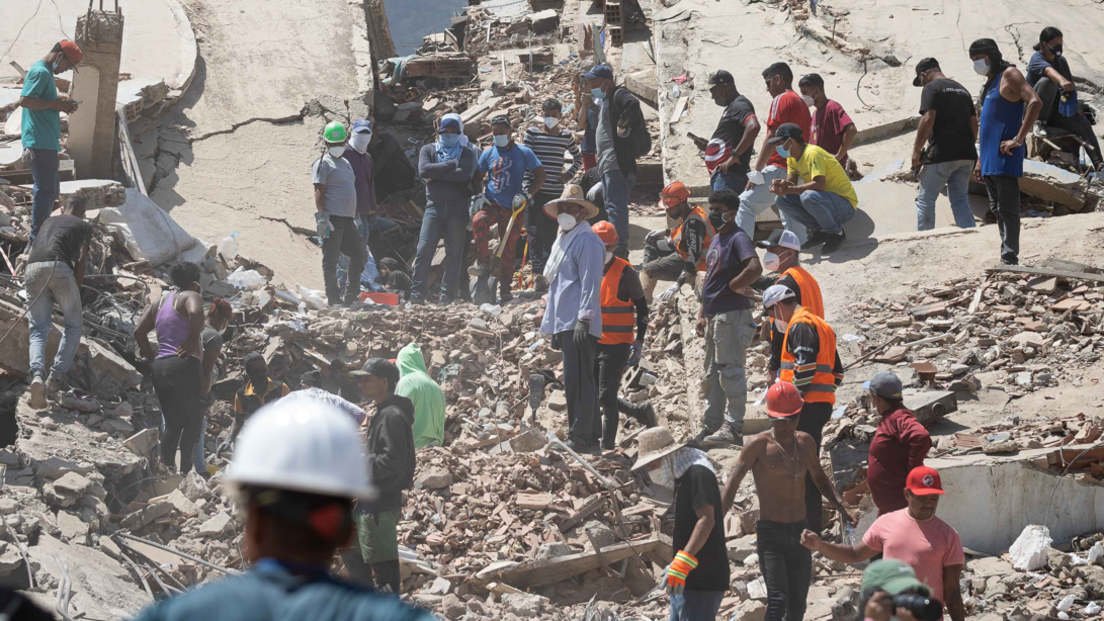
While international aid poured in, Venezuelan residents found themselves left to attempt rescue with little government help. In the port city of La Guaira, crowds wielded crowbars, mallets and pick‑axes, trying to dig loved ones out of collapsed structures. About ten‑thousand people remain missing.
The anxious mood was compounded when a magnitude 4.6 aftershock struck the same areas early on Monday, shaking La Guaira and Caracas but causing no further damage. In nearby Catia La Mar, volunteers and international teams continued rescue work amid frustration over the slow arrival of official emergency equipment.
Local residents reported a lack of essential gear—only gloves, hard hats and manual tools. “The civil protection people decided to help, but the government didn’t give them the proper machines,” said 32‑year‑old electrician Ruben Rojas.
In La Guaira city, earth‑moving machinery arrived late, leaving volunteers like 39‑year‑old Carolyn Zerpa to manually sift rubble for her missing father and brother. She told reporters, “You cannot do much with just a pickaxe.”
Community members in rural areas such as El Junquito—west of Caracas—reported the absence of public officials and rely on local farms for basic supplies. “We are waiting for answers, for debris to be cleared and for the worst‑affected people to be helped,” says 33‑year‑old resident Keily Ibarra.
The government has mobilized more than 25,000 emergency workers, police and soldiers. Interim President Delcy Rodríguez announced a commission led by National Assembly President Jorge Rodríguez to assess damage using a color‑coded traffic‑light safety system and set up temporary camps for displaced civilians.
The first laboratory rescue of a 21‑year‑old, Aaron Levi Cantillo Vargas, was conducted on Monday in Caraballeda. Rescue teams from Venezuela, Mexico and El Salvador pulled him from rubble after more than 100 hours of entrapment. Salvadoran President Nayib Bukele praised the effort and said the team would keep searching.
UN humanitarian coordinator Gianluca Rampolla Del Tindaro confirmed that the region had suffered more than 500 aftershocks, with roughly 2,500 structures affected and most collapsed. He stressed that 10,000 body bags were being procured and that the death toll was likely to rise.
International aid responses combined favoured the spread of relief. The United States increased its commitment to $300 million, pledging funds for emergency medical care, food, water, sanitation, shelter, protection and logistics. The US Navy’s USS Fort Lauderdale docked at La Guaira to speed up aid delivery, while marines used amphibious craft to reach the most affected areas. The Netherlands announced a vessel carrying supplies, and China committed roughly $15 million in assistance.