In brief
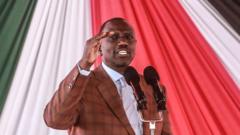
President William Ruto of Kenya has announced the construction of a new church at State House, causing a stir among citizens over the intertwining of religion and state affairs.
In a bold declaration, President William Ruto confirmed plans to build a grand church within the presidential residence in Nairobi, an initiative he claims to fund with his personal finances. He asserted, "I am not going to ask anyone for an apology for building a church," amidst growing frustration among Kenyans regarding his leadership style and the perceived convergence of the church and state.Ruto's remarks on the matter were met with skepticism, as locals pondered who he meant by referring to "the devil." Despite the backlash, President Ruto remains resolute in moving forward with the church, stating that no obstacles will hinder the project's progress. Reports from the Daily Nation indicate that architectural designs reveal a sizable building equipped with stained glass windows and an 8,000-seat capacity.Critics question the appropriateness of such an endeavor, particularly in the context of Kenya's secular constitution and the economic struggles facing many citizens. With an estimated cost of $9 million, the project has raised eyebrows, igniting discussions about Ruto's authority to construct such a building on government property.An MP's open letter highlighted that Kenya is not solely a Christian nation, as approximately 85% of Kenyans identify as Christian, alongside a notable Muslim community of around 11%, as well as various minority faiths including Hinduism and traditional African religions. Presently, there are no mosques or temples on state property.In defense of his decision, Ruto pointed out that he inherited a makeshift iron sheet structure for the church upon entering State House, questioning its suitability for the presidential residence. Known for his overt displays of faith and emotional speeches, Ruto has earned the moniker "deputy Jesus" and aims to solidify his religious image throughout his presidency.The public reaction reflects a complex blend of support for Ruto's convictions and concerns over the state of church-state separation, revealing a significant divide in perceptions of his leadership.