In brief
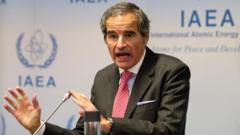
International Atomic Energy Agency’s director general, Rafael Grossi, has highlighted serious concerns regarding Iran's uranium enrichment activities, suggesting a growing risk of nuclear proliferation.
The head of the International Atomic Energy Agency (IAEA), Rafael Grossi, has voiced significant concerns regarding Iran's enhanced uranium enrichment, which was described as "very worrisome." Following his discussions with Iranian officials, Grossi revealed to the BBC that Iran's stockpile of uranium enriched to 60% purity was increasing—this purity is perilously close to the levels required for nuclear weapon development. This escalation appears to be a strategic move by Tehran in response to its military and diplomatic setbacks in regions like Syria, Lebanon, and Gaza. While Grossi acknowledged that some Iranian politicians advocate for developing nuclear weapons, he noted that the current leadership does not appear inclined towards this path.Speaking at the Manama Dialogue conference in Bahrain, Grossi cautioned Israel against any military actions targeting Iranian nuclear sites, warning that the repercussions could be "very serious" and involve the risk of radiation spread. He expressed that the normalization of discussions regarding nuclear arms among various countries is "extremely concerning."In a recent report presented to IAEA governors, it was confirmed that Iran was increasing the rate of uranium production at its Fordow nuclear facility, with projections estimating an output of 34kg of 60%-enriched uranium monthly, a stark rise from previous levels. Grossi called for urgent additional safeguards at Fordow to ensure transparency regarding Iran's enrichment activities.While Iran continues to deny any intent for military nuclear development, Grossi pointed out that the growth of its nuclear program has been immense over the past decade. "The Iran of 2015 is vastly different from that of 2025," he stated, adding that the nation is now capable of achieving the amounts necessary for a nuclear weapon much more rapidly if it chooses.Despite Iran's assurances to limit their production of highly enriched uranium, Grossi mentioned the increasing pressure from factions within Iran advocating for a more aggressive nuclear stance. He expressed hope that the government would resist such temptations, emphasizing that pursuing a nuclear weapons program would result in dire consequences.While no full-scale Israeli military strike has occurred against Iranian nuclear facilities yet, discussions among Israeli officials about potential attacks persist. Grossi reiterated the importance of avoiding this path, highlighting the complexity and risks associated with targeting Iran's heavily fortified underground nuclear sites.Additionally, Grossi indicated that the global regime of nuclear non-proliferation is under significant strain, with established nuclear states modernizing their arsenals. This trend has led other nations to contemplate their own nuclear capabilities, driven by a sense of insecurity amid escalating international conflicts.