In brief
Mayotte has recently declared a state of exceptional natural disaster, marking a significant response to the destruction caused by Cyclone Chido. The cyclone, regarded as the most severe storm to hit the region in nearly a century, has led to the death of at least 31 individuals, with many more unaccounted for. President Emmanuel Macron is scheduled to visit the affected area as the French government escalates its response options.
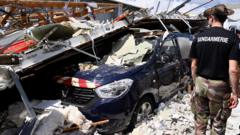
The emergency declaration, a first for France’s overseas territories, aims to expedite support systems for the territory's recovery. The declaration, set for an initial period of one month, may see extensions as needed. François-Noël Buffet, the minister overseeing overseas territories, emphasized the urgent need for substantial resources to restore essential services and develop effective reconstruction strategies.As emergency services work to deliver much-needed food and water supplies, concerns mount over potential outbreaks of infectious diseases, complicated by a dire shortage of clean drinking water. The authorities are taking necessary steps to reactivate water facilities while half of Mayotte still lacks electricity. In an effort to maintain order and prevent looting, a newly imposed curfew restricts movement during nighttime hours.Mayotte, one of France's poorer territories, houses many residents in precarious living conditions, and the cyclone has reportedly hit migrant populations particularly hard. The storm left substantial destruction in its wake, with wind speeds exceeding 225 km/h (140 mph), devastating communities reliant on informal settlements.Chido's destructive force extended beyond Mayotte, resulting in at least 45 casualties in Mozambique and 13 in Malawi as it moved inland. The world watches as recovery efforts intensify and the resilience of the region’s inhabitants is put to the test.