
In brief
In response to ongoing sectarian violence, the Syrian presidency plans to send reinforcements to the region of Suweida, where Bedouin and Druze fighters have clashed. With the death toll rising dramatically since Sunday, the government is under increasing pressure as accusations of extrajudicial killings arise. A potential ceasefire has been hinted by diplomatic channels, involving key regional players.
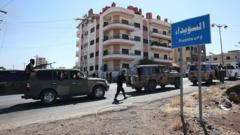
The Syrian presidency has declared its intention to deploy a new military force aimed at curtailing the outbreak of sectarian violence that has sparked deadly clashes between Bedouin and Druze factions in the southern region of Suweida. The announcement followed a grim report detailing a staggering death toll of nearly 600 people since hostilities erupted on Sunday.Interim President Ahmed al-Sharaa's office has called upon all involved parties to practice restraint as fighting resumed near the city of Suweida on Friday. Local residents have accused government troops of perpetrating killings of Druze civilians and engaging in extrajudicial executions, thereby exacerbating tensions in an already volatile region.In an escalating regional response, Israel carried out strikes against Syrian military positions, prompting a retreat of government forces from Suweida province. On the same day, the U.S. ambassador to Turkey, Tom Barrack, stated that Israel and Syria were thought to have agreed on a ceasefire, a claim yet to be publicly acknowledged by both governments.In a series of social media posts, Barrack urged Druze, Bedouins, and Sunnis to cease hostilities and collaboratively work towards a cohesive Syrian identity grounded in peace and mutual prosperity. The ambassador’s comments were echoed by an Israeli official who confirmed that limited Syrian Internal Security Forces would be allowed into the area for 48 hours to safeguard Druze civilians amid the ongoing unrest.Suweida is predominantly inhabited by Druze who practice a unique sect of Islam with roots in Shia beliefs but have been increasingly wary of the jihadist-led Syrian government. Reports of sectarian animosity towards the Druze have been on the rise, raising concerns about broader instability within the country.The United Nations’ human rights chief, Volker Türk, highlighted the risks faced by minority groups in Syria, confirming credible accounts of severe abuses in Suweida, including allegations of summary executions undertaken by both state security forces and local armed groups.In a televised address earlier this week, President Sharaa expressed his commitment to holding accountable those responsible for the violence, pledging to prioritize the protection of the Druze community in the face of their ongoing vulnerability. He attributed the chaos to "outlaw groups" that have repeatedly refused to negotiate. As Suweida descends into further chaos, the situation remains critical, with calls for immediate cessation of violence and accountability for those involved in the bloodshed.

