
In brief
Germany's conservative leader Friedrich Merz announced a coalition deal with the Social Democrats aimed at creating a responsive government for Europe's largest economy, following a period of political uncertainty. With the country facing economic challenges and an upcoming election, Merz asserts the partnership will send a strong message of stability both to the nation and the EU.
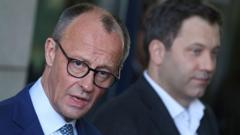
Germany's conservatives have officially partnered with the Social Democrats to form a government after months of political stasis following the last administration's collapse. Friedrich Merz, the newly appointed leader of the Christian Democrats (CDU), expressed that this coalition sends "a strong and clear signal" indicating that Germany is prepared to regain its stable leadership. In the context of a pre-existing recession exacerbated by international trade tensions, notably from the Trump administration's tariffs, Merz emphasizes a commitment to revitalizing the economy and enhancing defense capabilities. He remarks, "The key message to Donald Trump is that Germany is back on track." As part of the coalition agreement, officials have introduced proposals to tackle irregular migration and strengthen military readiness, addressing prominent voter concerns from recent elections. The government aims to control immigration while investing significantly in defense to boost military strength, all whilst avoiding conscription. Instead, there will be a focus on voluntary military service, akin to Sweden's model.The coalition will also continue to support Ukraine amidst surrounding geopolitical tensions. While Merz’s administration appears poised for success, challenges remain, including managing recovery from recession and facing competition from the far-right Alternative for Germany (AfD), which is projected to surpass the CDU in popularity.The coalition looks forward to the parliamentary vote set for the week of May 5, where Merz is widely expected to be elected as chancellor. While anticipation grows for this new government, opposition voices warn that the proposed measures might fall short of adequately addressing Germany's economic plight, dubbing potential outcomes as the "Merzession".With a tradition of "grand coalitions" in Germany, this new partnership seeks to distinguish itself by not simply repeating past governance strategies. Polls indicate a competitive political landscape ahead, as the AfD positions itself to challenge mainstream parties under the promise of political transformation.

