
In brief
EU officials stress readiness to negotiate while highlighting the negative ramifications on various sectors.
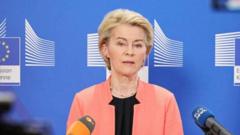
In response to President Donald Trump's unexpected announcement of a blanket 20% tariff on European goods, leaders across Europe have rallied to negotiate while preparing for significant economic implications. French Prime Minister François Bayrou labeled the decision a "catastrophe for the economic world," while European Commission President Ursula von der Leyen expressed concern about the dire consequences for millions globally.The European Union, representing 27 member states, is set to address the tariffs through both negotiation and retaliation. EU Trade Commissioner Maros Sefcovic plans to engage with U.S. counterparts, stressing a calm and measured evaluation of the EU's response.Countries like Italy, keenly aware of their exposure to U.S. markets, are mobilizing quickly. Prime Minister Giorgia Meloni convened an emergency summit, underscoring the potential economic hit on Italy's vital agrifood and wine exports, which total €3.6bn to the U.S. markets. Spain's Prime Minister Pedro Sánchez countered claims by Trump regarding tariffs, asserting that Europe's actual tariffs on U.S. goods stand at a mere 3%, cautioning that the trade war could ultimately harm the U.S. the most.Concerns ripple through Europe’s markets as companies brace for the fallout. Analysts predict a substantial decline in export revenues, particularly in the machinery and agricultural sectors. Countries such as Slovakia and Poland brace for forecasted drops in economic output, while French winemakers like Jérôme Bauer warn of losses in their key market share. The sentiment within the EU underscores a united front against the tariffs. German officials highlighted the unprecedented nature of Trump’s tariffs while expressing confidence in Europe's internal market strength. However, coordination remains essential, especially as EU leaders prepare retaliatory measures that may target U.S. goods and even digital services.On the horizon, the EU plans to implement a robust response starting mid-April, imposing €26bn worth of tariffs on U.S. goods. This preliminary package is intended as retaliation against earlier tariffs on EU steel and aluminum exports. Further discussions are underway for a more extensive set of countermeasures set to escalate tensions. With varying responses from member states, the EU's capacity for unity will determine its success in navigating this escalating trade conflict. The fear remains: what began as a tariff dispute could spiral into a broader trade war affecting both sides of the Atlantic.
